<?xml version="1.0" encoding="utf-8"?><?xml-stylesheet type="text/xsl" href="atom.xsl"?>
<feed xmlns="http://www.w3.org/2005/Atom">
    <id>https://blog.kamlatech.in/</id>
    <title>Kamlatech Blog Blog</title>
    <updated>2025-07-09T00:00:00.000Z</updated>
    <generator>https://github.com/jpmonette/feed</generator>
    <link rel="alternate" href="https://blog.kamlatech.in/"/>
    <subtitle>Kamlatech Blog Blog</subtitle>
    <icon>https://blog.kamlatech.in/img/favicon.ico</icon>
    <entry>
        <title type="html"><![CDATA[Xenon Arc vs. MBTL Lamps for Color Fastness Testing]]></title>
        <id>https://blog.kamlatech.in/xenon-arc-vs-mbtl-lamps-for-color-fastness-testing</id>
        <link href="https://blog.kamlatech.in/xenon-arc-vs-mbtl-lamps-for-color-fastness-testing"/>
        <updated>2025-07-09T00:00:00.000Z</updated>
        <summary type="html"><![CDATA[Xenon Arc Lamp]]></summary>
        <content type="html"><![CDATA[<p><img decoding="async" loading="lazy" alt="Xenon Arc Lamp" src="https://blog.kamlatech.in/assets/images/xenon_starting-61e289892f54212b45037209ae2f3bad.webp" width="1920" height="1080" class="img_ev3q"></p>
<p>When we talk about the color fastness of textiles, especially how they react to light, the type of light source used for testing is very important. Standards like BS EN ISO 105-B02:2014 are in place to make sure these tests are accurate and consistent. This standard specifically calls for xenon arc lamps to simulate natural daylight, often referred to as D65. But what if a different lamp, like a Mercury Blended Tungsten Lamp (MBTL), is used instead? Let's dive into the differences and why it matters.</p>
<h3 class="anchor anchorTargetStickyNavbar_Vzrq" id="the-gold-standard-xenon-arc-lamps">The Gold Standard: Xenon Arc Lamps<a href="https://blog.kamlatech.in/xenon-arc-vs-mbtl-lamps-for-color-fastness-testing#the-gold-standard-xenon-arc-lamps" class="hash-link" aria-label="Direct link to The Gold Standard: Xenon Arc Lamps" title="Direct link to The Gold Standard: Xenon Arc Lamps" translate="no">​</a></h3>
<p><img decoding="async" loading="lazy" alt="Xenon Arc Lamp Lit" src="https://blog.kamlatech.in/assets/images/xenon_lit-3cb2379bf31a9bff59ab0a360c819641.webp" width="1488" height="940" class="img_ev3q"></p>
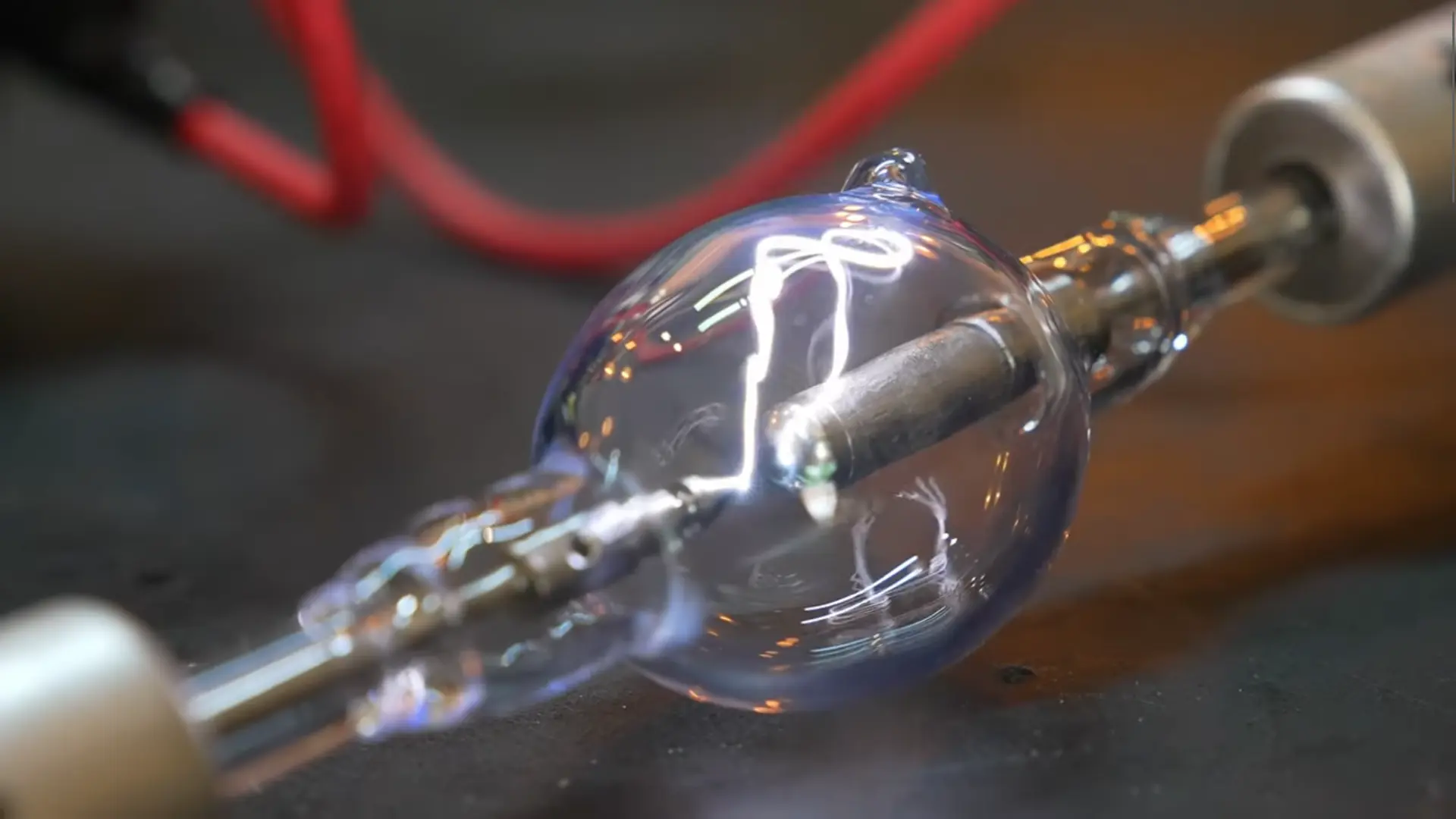
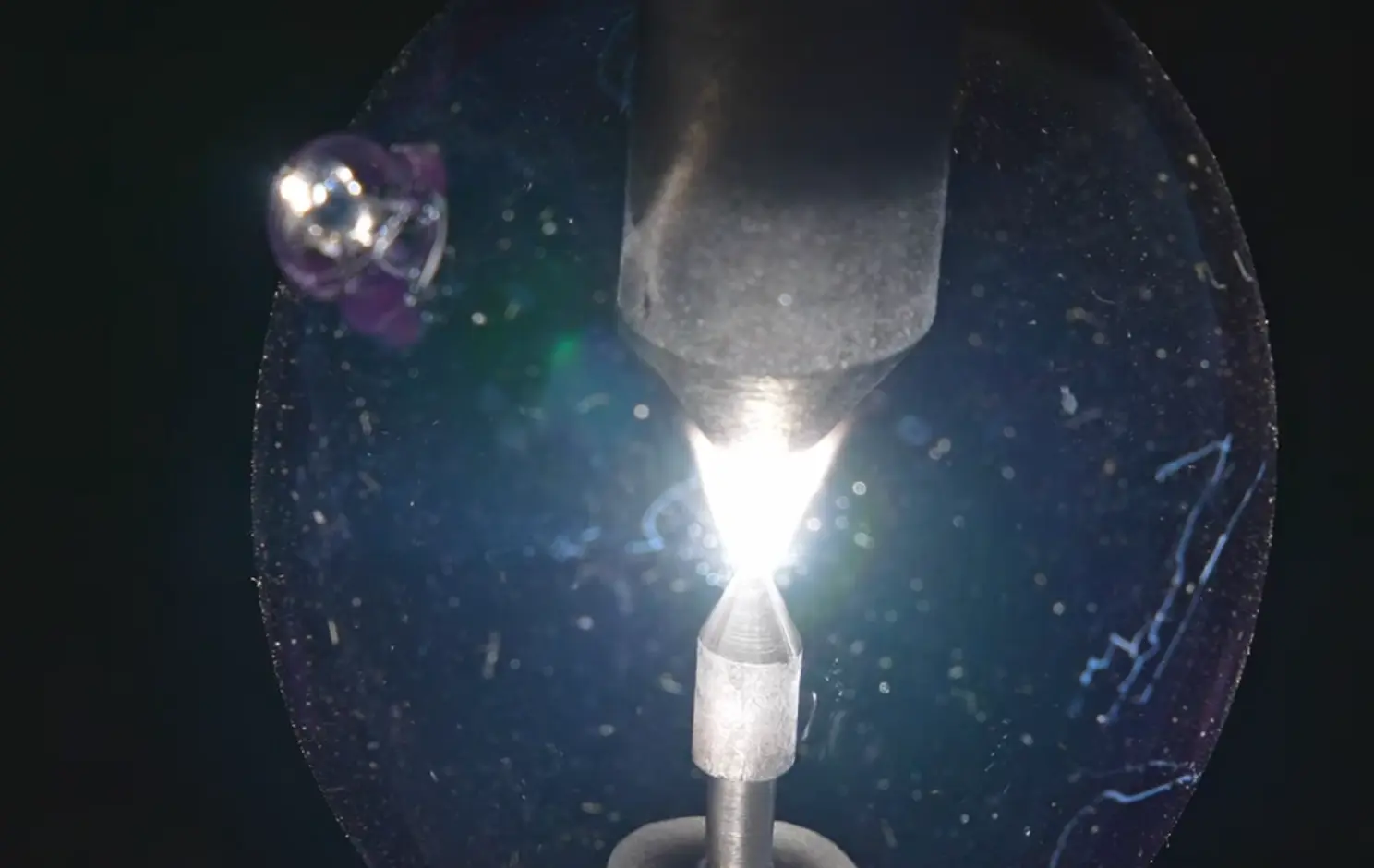
<p>The ISO 105-B02:2014 standard is pretty clear about its requirements for light sources. It mandates xenon arc exposure devices, which can be either water or air-cooled. These lamps are chosen because they can closely simulate natural daylight (D65). Here’s what the standard looks for:</p>
<ul>
<li class=""><strong>Correlated Colour Temperature (CCT):</strong> A xenon arc lamp should have a CCT between 5500 K and 6500 K. This range is crucial for replicating the color temperature of natural daylight.</li>
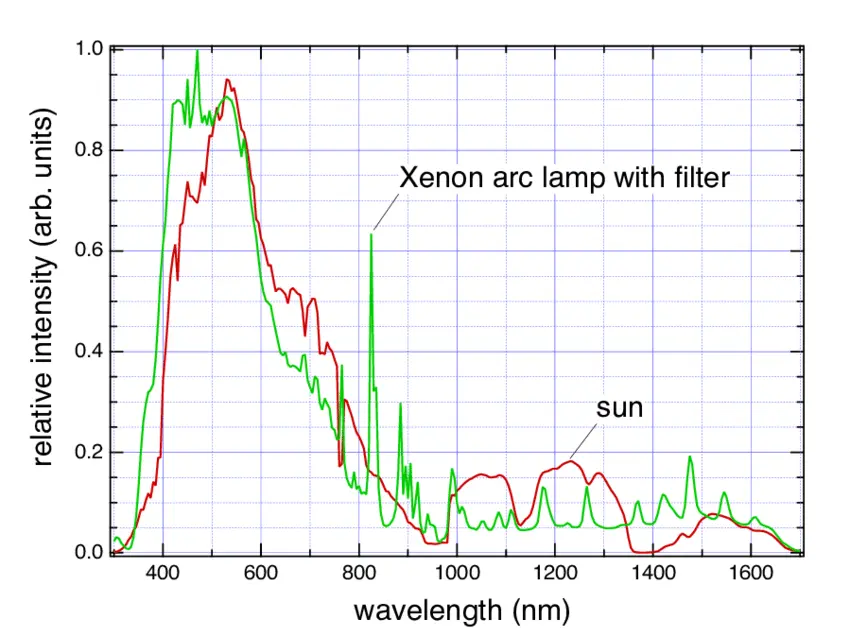
<li class=""><strong>Spectral Irradiance and Filters:</strong> Xenon burners naturally emit a lot of short-wavelength UV radiation, below 310 nm. To accurately simulate daylight, appropriate filters are used. These filters ensure that the spectral power distribution matches solar radiation, especially in the UV and visible regions. They also help in removing unrealistic UV radiation and controlling sample temperature by attenuating infrared (IR) radiation.</li>
<li class=""><strong>Irradiance Uniformity:</strong> The exposure device needs to make sure the light is uniform across the specimen. The variation in irradiance shouldn't be more than ±10% of the mean. This often involves revolving racks for vertically mounted lamps and periodic repositioning of specimens for consistent results.</li>
<li class=""><strong>Irradiance Control and Measurement:</strong> These devices come with starters and control equipment for adjusting the lamp's wattage, either manually or automatically. If automatic control is there, it uses radiometers to maintain specific irradiance levels, like 42 ± 2 W/m² in the 300 nm to 400 nm range.</li>
<li class=""><strong>Maintenance:</strong> Regular replacement of lamps and filters as per the manufacturer's instructions is key to maintaining accuracy.</li>
</ul>
<p><img decoding="async" loading="lazy" alt="Xenon Arc Spectro" src="https://blog.kamlatech.in/assets/images/xenon_arc_with_filter_spectro-e75682f01229117920401c51a67a7907.webp" width="850" height="637" class="img_ev3q"></p>
<p>A xenon arc lamp gives a broad, continuous spectrum across the UV-visible range, which is exactly what we need to accurately mimic sunlight's effect on materials.</p>
<h3 class="anchor anchorTargetStickyNavbar_Vzrq" id="the-challenger-mercury-blended-tungsten-lamps-mbtl">The Challenger: Mercury Blended Tungsten Lamps (MBTL)<a href="https://blog.kamlatech.in/xenon-arc-vs-mbtl-lamps-for-color-fastness-testing#the-challenger-mercury-blended-tungsten-lamps-mbtl" class="hash-link" aria-label="Direct link to The Challenger: Mercury Blended Tungsten Lamps (MBTL)" title="Direct link to The Challenger: Mercury Blended Tungsten Lamps (MBTL)" translate="no">​</a></h3>
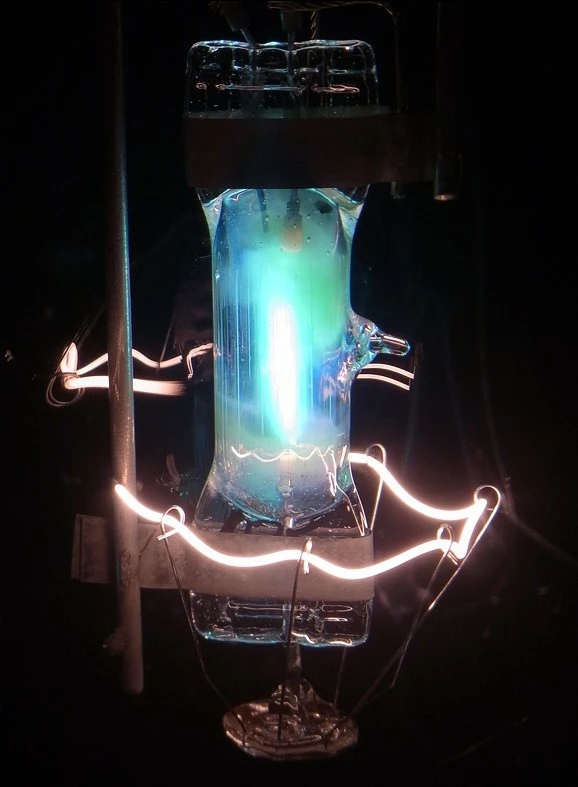
<p>In domestic market we find a lot if light fastness equipments using 500W Mercury Blended Tungsten Lamp (MBTL) that claim compliance with test method IS 2454, which is stated to be per ISO 105 B02. However, when we look at the spectral characteristics of MBTL lamps, we find some significant differences.</p>
<p><img decoding="async" loading="lazy" alt="MBTL Lit" src="https://blog.kamlatech.in/assets/images/MBTL_lit-70c8bf2df20b47f017203ddedd5ce874.webp" width="578" height="787" class="img_ev3q"></p>
<p>Let’s take an example: a Philips Mercury Blended ML 160W Clear lamp.</p>
<ul>
<li class="">Its Correlated Colour Temperature (CCT) is around 3800 K. This is much lower than the 5500 K to 6500 K range mandated by ISO for D65 simulation.</li>
<li class="">The Colour Rendering Index (CRI) of this MBTL is 60 Ra, while a D65 simulator has an Ra of 96. A lower CRI means it's not very good at rendering colors accurately.</li>
</ul>
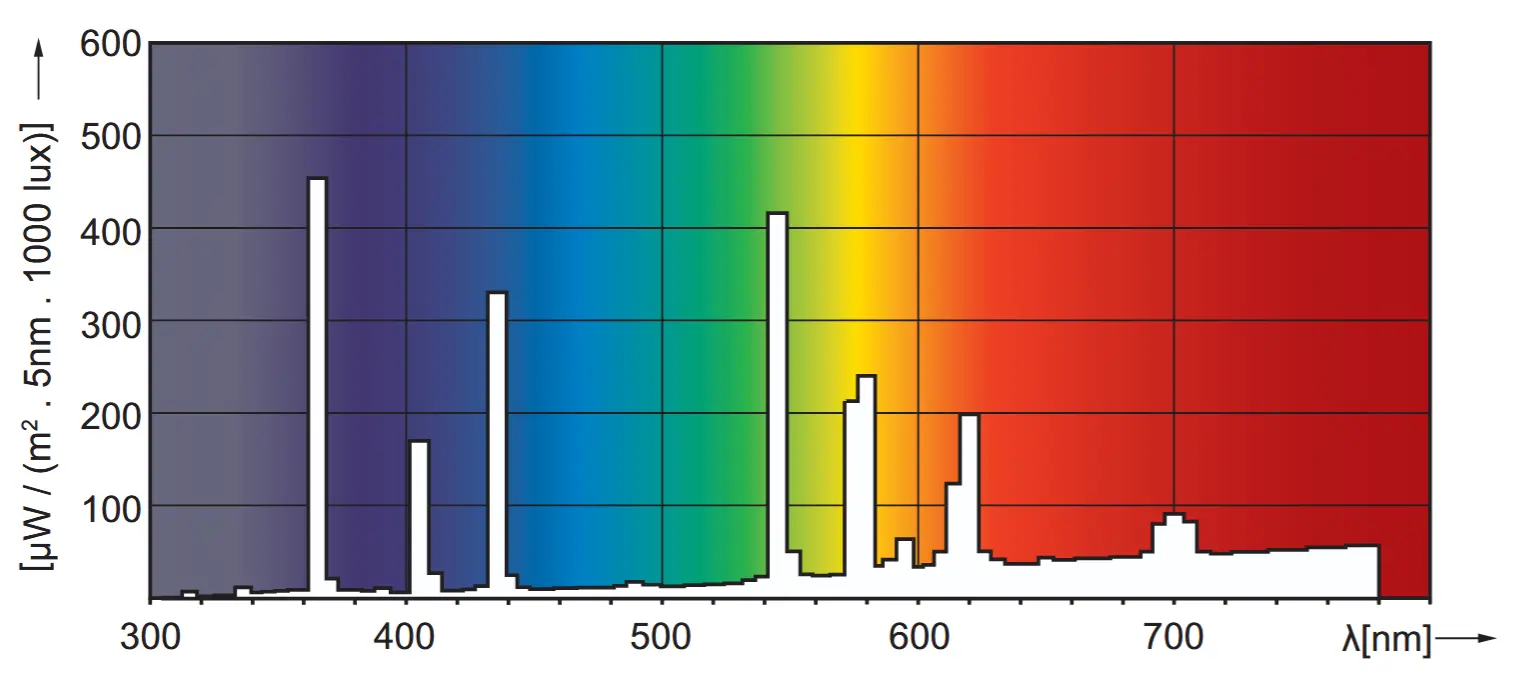
<p>The spectral power distribution of MBTL lamps is also quite different. They show distinct spectral spikes, which are characteristic of mercury vapor discharge, superimposed on a continuous spectrum from the tungsten filament. This is in stark contrast to the smooth, continuous spectrum of natural daylight and filtered xenon arc lamps. You'd see prominent spikes, especially in the blue (around 430-440nm) and yellow-green (around 540-580nm) regions.</p>
<p><img decoding="async" loading="lazy" alt="MBTL Spectro" src="https://blog.kamlatech.in/assets/images/MBTL_spectro-95e82be5cd30f393048b30613d2affe6.webp" width="1516" height="677" class="img_ev3q"></p>
<div class="theme-admonition theme-admonition-warning admonition_xJq3 alert alert--warning"><div class="admonitionHeading_Gvgb"><span class="admonitionIcon_Rf37"><svg viewBox="0 0 16 16"><path fill-rule="evenodd" d="M8.893 1.5c-.183-.31-.52-.5-.887-.5s-.703.19-.886.5L.138 13.499a.98.98 0 0 0 0 1.001c.193.31.53.501.886.501h13.964c.367 0 .704-.19.877-.5a1.03 1.03 0 0 0 .01-1.002L8.893 1.5zm.133 11.497H6.987v-2.003h2.039v2.003zm0-3.004H6.987V5.987h2.039v4.006z"></path></svg></span>warning</div><div class="admonitionContent_BuS1"><p>Using an instrument that relies on an MBTL lamp would not accurately simulate the D65 daylight spectrum required by the ISO 105 standard. The pronounced spikes and lower color temperature would likely lead to inconsistent and unreliable color fastness test results. Materials would react differently to this altered spectral signature compared to true daylight or a compliant xenon source.</p></div></div>
<h3 class="anchor anchorTargetStickyNavbar_Vzrq" id="recent-developments-in-light-fastness-testing">Recent Developments in Light Fastness Testing<a href="https://blog.kamlatech.in/xenon-arc-vs-mbtl-lamps-for-color-fastness-testing#recent-developments-in-light-fastness-testing" class="hash-link" aria-label="Direct link to Recent Developments in Light Fastness Testing" title="Direct link to Recent Developments in Light Fastness Testing" translate="no">​</a></h3>
<p>In the realm of textile testing, continuous innovation aims to improve accuracy and efficiency. For instance, recent advancements in LED technology are also being explored for light fastness testing. While not yet a direct replacement for xenon arc in all ISO standards due to spectral matching challenges, researchers are developing LED-based systems that offer more control over specific wavelengths and energy efficiency. These developments aim to mimic the D65 spectrum more closely, potentially offering alternatives in the future, but currently, xenon arc remains the prescribed standard for its proven ability to replicate natural sunlight.</p>
<h3 class="anchor anchorTargetStickyNavbar_Vzrq" id="wrapping-up">Wrapping Up<a href="https://blog.kamlatech.in/xenon-arc-vs-mbtl-lamps-for-color-fastness-testing#wrapping-up" class="hash-link" aria-label="Direct link to Wrapping Up" title="Direct link to Wrapping Up" translate="no">​</a></h3>
<p>For accurate and reliable color fastness testing of textiles according to ISO 105-B02:2014, xenon arc lamps are the mandated and most suitable choice. Their ability to closely simulate the spectral distribution, CCT, and irradiance uniformity of natural daylight is unmatched. While other light sources like MBTL lamps might seem like an alternative, their fundamentally different spectral characteristics can lead to inaccurate and unreliable test results, compromising the integrity of your material assessments.</p>
<p>Happy Testing!</p>]]></content>
        <author>
            <name>Prashant Verma</name>
            <uri>https://www.linkedin.com/in/prashant3285/</uri>
        </author>
        <category label="Technical Textile" term="Technical Textile"/>
    </entry>
    <entry>
        <title type="html"><![CDATA[Flax Based Composites in the Automotive Industry]]></title>
        <id>https://blog.kamlatech.in/flax-based-composites-automotive-industry</id>
        <link href="https://blog.kamlatech.in/flax-based-composites-automotive-industry"/>
        <updated>2025-06-22T00:00:00.000Z</updated>
        <summary type="html"><![CDATA[Flax Fabric]]></summary>
        <content type="html"><![CDATA[<p><img decoding="async" loading="lazy" alt="Flax Fabric" src="https://blog.kamlatech.in/assets/images/flax-fabric-1c9fe207f5dc770d5f97604d63268324.webp" width="799" height="533" class="img_ev3q">
The automotive industry is constantly looking for ways to make vehicles lighter, more fuel-efficient, and more sustainable. Traditional materials like steel and aluminum have served us well, but they come with certain limitations, particularly when we consider environmental impact and weight. This is where composite materials step in, offering a compelling alternative. Among these, flax-based composites are gaining significant traction, presenting a promising path toward greener and more efficient automotive manufacturing.</p>
<p>Flax, a natural fiber, has been used by humans for thousands of years, primarily for textiles. Its recent emergence in advanced materials like composites is due to its impressive mechanical properties combined with a remarkably low environmental footprint. When compared to synthetic fibers such as glass or carbon fiber, flax stands out for its renewability, biodegradability, and lower energy consumption during production.</p>
<h3 class="anchor anchorTargetStickyNavbar_Vzrq" id="why-flax">Why Flax?<a href="https://blog.kamlatech.in/flax-based-composites-automotive-industry#why-flax" class="hash-link" aria-label="Direct link to Why Flax?" title="Direct link to Why Flax?" translate="no">​</a></h3>
<p>Flax fibers are known for their high specific stiffness and strength, meaning they offer excellent performance for their weight. This is crucial in automotive applications where every kilogram matters. Reducing vehicle weight directly translates to improved fuel economy for internal combustion engines and extended range for electric vehicles. Beyond weight savings, flax composites also exhibit good vibration damping and acoustic insulation properties, contributing to a more comfortable and quieter ride.</p>
<p>From an environmental perspective, flax cultivation requires less water and fewer pesticides compared to other crops. As a natural material, it's also biodegradable, which is a significant advantage in end-of-life vehicle disposal. This aligns perfectly with the automotive industry's push towards a circular economy and reduced carbon emissions.</p>
<h3 class="anchor anchorTargetStickyNavbar_Vzrq" id="current-applications-and-recent-breakthroughs">Current Applications and Recent Breakthroughs<a href="https://blog.kamlatech.in/flax-based-composites-automotive-industry#current-applications-and-recent-breakthroughs" class="hash-link" aria-label="Direct link to Current Applications and Recent Breakthroughs" title="Direct link to Current Applications and Recent Breakthroughs" translate="no">​</a></h3>
<p>Flax-based composites are already finding their way into various automotive components. You might be surprised to learn that some car manufacturers are already using these materials for interior parts like door panels, seat backs, and parcel shelves. Their aesthetic appeal, combined with their lightweight nature, makes them ideal for these applications.</p>
<p>Beyond interiors, research and development are pushing the boundaries further. Consider the recent advancements in structural components. For instance, some concept vehicles and even limited production models are exploring the use of flax composites in semi-structural elements such as spare wheel wells, battery housings, and underbody panels. The challenge here is meeting stringent safety and performance standards, but ongoing research into optimizing fiber alignment, resin systems, and manufacturing processes is yielding impressive results.</p>
<p>A notable example is the work being done by companies like Volvo and Porsche, who have been actively investigating natural fiber composites for various applications. While not always flax specifically, their research into sustainable alternatives highlights the industry's commitment. Moreover, organizations like the European Space Agency (ESA) have even explored flax composites for aerospace applications, demonstrating their potential in demanding environments, which naturally translates to automotive possibilities.</p>
<h3 class="anchor anchorTargetStickyNavbar_Vzrq" id="challenges-and-future-outlook">Challenges and Future Outlook<a href="https://blog.kamlatech.in/flax-based-composites-automotive-industry#challenges-and-future-outlook" class="hash-link" aria-label="Direct link to Challenges and Future Outlook" title="Direct link to Challenges and Future Outlook" translate="no">​</a></h3>
<p>While the benefits are clear, integrating flax-based composites widely into automotive production isn't without its challenges. Consistency in fiber quality, moisture absorption, and processing techniques need further refinement. The cost of manufacturing flax composites, while potentially lower than carbon fiber, can still be higher than traditional materials like steel for certain components.</p>
<p>However, the future looks bright. As manufacturing processes become more efficient and the supply chain for automotive-grade flax fibers matures, we can expect to see a more widespread adoption. Research is ongoing to improve the interfacial adhesion between flax fibers and various polymer matrices, enhancing overall performance. Additionally, the development of hybrid composites, where flax is combined with other fibers (natural or synthetic), offers a way to balance cost, performance, and sustainability.</p>
<p>The automotive industry is at a crossroads, with increasing pressure to innovate sustainably. Flax-based composites offer a compelling solution, providing a lighter, greener, and potentially safer alternative to conventional materials. We are just beginning to scratch the surface of what these versatile natural fibers can achieve.</p>]]></content>
        <author>
            <name>Prashant Verma</name>
            <uri>https://www.linkedin.com/in/prashant3285/</uri>
        </author>
        <category label="Sustainability" term="Sustainability"/>
    </entry>
    <entry>
        <title type="html"><![CDATA[Flax Fiber - A Sustainable Material]]></title>
        <id>https://blog.kamlatech.in/flax-fiber-properties-sustainable-material</id>
        <link href="https://blog.kamlatech.in/flax-fiber-properties-sustainable-material"/>
        <updated>2025-06-22T00:00:00.000Z</updated>
        <summary type="html"><![CDATA[Flax Fiber]]></summary>
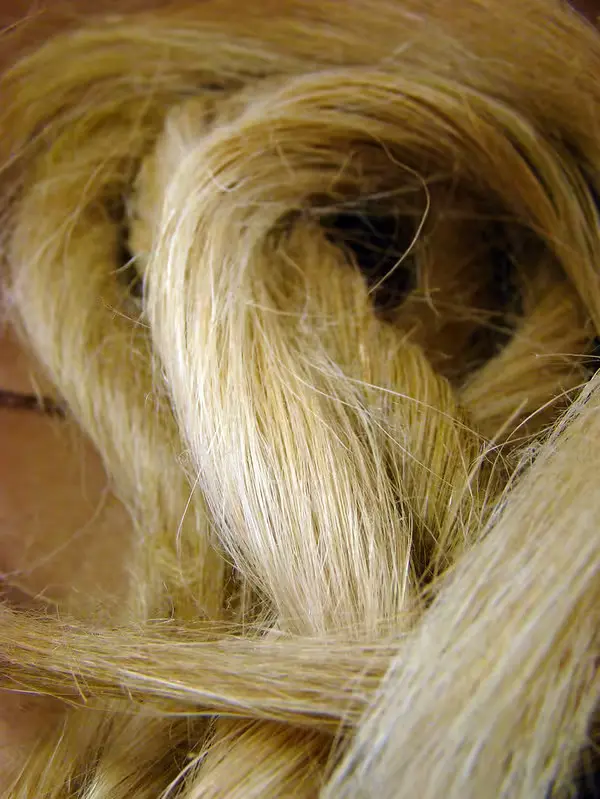
        <content type="html"><![CDATA[<p><img decoding="async" loading="lazy" alt="Flax Fiber" src="https://blog.kamlatech.in/assets/images/flax-fiber-f9d5340454699da17b91b20015a34dc2.webp" width="600" height="799" class="img_ev3q">
Often overlooked in favor of synthetic materials, flax offers a compelling alternative, especially as we push for more sustainable and environmentally friendly solutions. Understanding its journey from plant to useful fiber is key to appreciating its potential.</p>
<h3 class="anchor anchorTargetStickyNavbar_Vzrq" id="origin-of-flax-fiber">Origin of Flax Fiber<a href="https://blog.kamlatech.in/flax-fiber-properties-sustainable-material#origin-of-flax-fiber" class="hash-link" aria-label="Direct link to Origin of Flax Fiber" title="Direct link to Origin of Flax Fiber" translate="no">​</a></h3>
<p>Flax, or <em>Linum usitatissimum</em>, is one of the oldest cultivated fiber crops, with evidence of its use dating back thousands of years. It thrives in temperate climates and has historically been used for textiles (linen), paper, and even food (linseed oil and seeds). Its long, strong fibers are what make it particularly interesting for various industrial applications.</p>
<h3 class="anchor anchorTargetStickyNavbar_Vzrq" id="extraction-of-flax-fiber">Extraction of Flax Fiber<a href="https://blog.kamlatech.in/flax-fiber-properties-sustainable-material#extraction-of-flax-fiber" class="hash-link" aria-label="Direct link to Extraction of Flax Fiber" title="Direct link to Extraction of Flax Fiber" translate="no">​</a></h3>
<p>Extracting flax fibers from the plant stem is a multi-step process that largely relies on retting, a controlled decomposition of the plant matter surrounding the fibers.</p>
<ol>
<li class=""><strong>Harvesting:</strong> Flax plants are typically pulled from the ground rather than cut, to maximize the length of the fibers.</li>
<li class=""><strong>Retting:</strong> This crucial step involves microbial or chemical decomposition to break down the pectin that binds the fibers to the woody core of the stem.<!-- -->
<ul>
<li class=""><strong>Dew Retting:</strong> Plants are spread in fields and exposed to dew and rain, allowing natural fungi and bacteria to break down the pectin. This is the most common method.</li>
<li class=""><strong>Water Retting:</strong> Bundles of flax are submerged in water (rivers, tanks) for a period. This method is faster but can be more environmentally impactful due to the water used and potential for odor.</li>
<li class=""><strong>Enzyme Retting:</strong> A more controlled method using specific enzymes to achieve retting.</li>
</ul>
</li>
<li class=""><strong>Drying:</strong> After retting, the flax stems are dried to prepare them for the next stages.</li>
<li class=""><strong>Breaking:</strong> The dried, retted stalks are passed through rollers that crush the woody core, separating it from the fibers.</li>
<li class=""><strong>Scutching:</strong> This process removes the broken woody particles (shives) from the fibers, yielding long, relatively clean flax fibers.</li>
<li class=""><strong>Hackling:</strong> The fibers are then combed to separate the short, tangled fibers (tow) from the long, straight fibers (line), aligning them for further processing.</li>
</ol>
<div class="theme-admonition theme-admonition-info admonition_xJq3 alert alert--info"><div class="admonitionHeading_Gvgb"><span class="admonitionIcon_Rf37"><svg viewBox="0 0 14 16"><path fill-rule="evenodd" d="M7 2.3c3.14 0 5.7 2.56 5.7 5.7s-2.56 5.7-5.7 5.7A5.71 5.71 0 0 1 1.3 8c0-3.14 2.56-5.7 5.7-5.7zM7 1C3.14 1 0 4.14 0 8s3.14 7 7 7 7-3.14 7-7-3.14-7-7-7zm1 3H6v5h2V4zm0 6H6v2h2v-2z"></path></svg></span>info</div><div class="admonitionContent_BuS1"><p>Recent innovations in flax fiber extraction focus on more environmentally friendly and efficient methods, such as enzymatic retting and mechanical decortication, to reduce water consumption and chemical waste.</p></div></div>
<h3 class="anchor anchorTargetStickyNavbar_Vzrq" id="mechanical-properties-of-flax-fiber">Mechanical Properties of Flax Fiber<a href="https://blog.kamlatech.in/flax-fiber-properties-sustainable-material#mechanical-properties-of-flax-fiber" class="hash-link" aria-label="Direct link to Mechanical Properties of Flax Fiber" title="Direct link to Mechanical Properties of Flax Fiber" translate="no">​</a></h3>
<p>Flax fibers possess a unique combination of mechanical properties that make them attractive for various applications, especially where sustainability and weight reduction are key. These properties can vary based on factors like cultivation conditions, retting methods, and fiber processing.</p>
<ul>
<li class=""><strong>Tensile Strength:</strong> Flax fibers typically exhibit tensile strengths ranging from 500 MPa to 900 MPa, with some reports indicating values up to 1500 MPa depending on the specific variety and processing. This makes them comparable to or even stronger than some grades of E-glass fibers on a specific strength basis.</li>
<li class=""><strong>Elastic Modulus (Stiffness):</strong> The elastic modulus of flax fibers generally falls within the range of 45 GPa to 70 GPa. This indicates a good level of stiffness, contributing to the rigidity of materials reinforced with flax.</li>
<li class=""><strong>Density:</strong> Flax fibers are notably lightweight, with a density typically between 1.4 g/cm³ and 1.5 g/cm³. This low density is a significant advantage for applications where weight reduction is crucial.</li>
<li class=""><strong>Elongation at Break:</strong> Flax fibers usually have an elongation at break of around 1.2% to 3.0%. This relatively low elongation means they are stiff but can also be somewhat brittle compared to some synthetic fibers.</li>
<li class=""><strong>Specific Properties:</strong> Due to their low density, flax fibers often exhibit high specific strength and specific stiffness, meaning their strength and stiffness per unit of weight are excellent. This is a key reason for their increasing use in lightweight structures.</li>
</ul>
<h3 class="anchor anchorTargetStickyNavbar_Vzrq" id="other-important-properties-of-flax-fiber">Other Important Properties of Flax Fiber<a href="https://blog.kamlatech.in/flax-fiber-properties-sustainable-material#other-important-properties-of-flax-fiber" class="hash-link" aria-label="Direct link to Other Important Properties of Flax Fiber" title="Direct link to Other Important Properties of Flax Fiber" translate="no">​</a></h3>
<p>Beyond mechanical properties, flax fibers possess several other characteristics that contribute to their appeal:</p>
<ul>
<li class=""><strong>Moisture Regain:</strong> Flax fibers are hydrophilic, meaning they absorb moisture readily. Their moisture regain can be as high as 8-12% at standard conditions. This property can be both an advantage (e.g., in textiles for comfort) and a challenge (e.g., in composites, requiring surface treatments for compatibility with hydrophobic resins).</li>
<li class=""><strong>Thermal Properties:</strong> Flax fibers have good thermal insulation properties due to their hollow structure and cellulosic composition. They also have a relatively low thermal conductivity.</li>
<li class=""><strong>Acoustic Damping:</strong> Natural fibers like flax are known for their excellent acoustic damping capabilities, meaning they can absorb sound waves, contributing to quieter environments.</li>
<li class=""><strong>Biodegradability:</strong> As a natural plant fiber, flax is inherently biodegradable and compostable, making it an environmentally friendly material at the end of its life cycle. This contrasts sharply with synthetic fibers which can persist in the environment for hundreds of years.</li>
<li class=""><strong>Renewability:</strong> Flax is a renewable resource, growing relatively quickly with minimal environmental impact compared to the energy-intensive production of many synthetic fibers.</li>
<li class=""><strong>Aesthetic Appeal:</strong> Flax fibers and materials derived from them often have a unique natural look and feel, which can be desirable in certain design applications.</li>
<li class=""><strong>Abrasion Resistance:</strong> While not as high as some synthetic fibers, flax possesses reasonable abrasion resistance, making it durable for various uses.</li>
<li class=""><strong>UV Resistance:</strong> Natural fibers generally have moderate UV resistance, which can be improved with appropriate treatments or by embedding them within a protective matrix.</li>
</ul>
<p>Here's a summary table of some typical properties:</p>
<table><thead><tr><th style="text-align:left">Property</th><th style="text-align:left">Typical Value Range</th><th style="text-align:left">Unit</th></tr></thead><tbody><tr><td style="text-align:left">Density</td><td style="text-align:left">1.4 - 1.5</td><td style="text-align:left">g/cm³</td></tr><tr><td style="text-align:left">Tensile Strength</td><td style="text-align:left">500 - 900 (up to 1500)</td><td style="text-align:left">MPa</td></tr><tr><td style="text-align:left">Elastic Modulus</td><td style="text-align:left">45 - 70</td><td style="text-align:left">GPa</td></tr><tr><td style="text-align:left">Elongation at Break</td><td style="text-align:left">1.2 - 3.0</td><td style="text-align:left">%</td></tr><tr><td style="text-align:left">Moisture Regain</td><td style="text-align:left">8 - 12</td><td style="text-align:left">%</td></tr><tr><td style="text-align:left">Diameter</td><td style="text-align:left">15 - 30</td><td style="text-align:left">µm</td></tr><tr><td style="text-align:left">Aspect Ratio (L/D)</td><td style="text-align:left">800 - 1000</td><td style="text-align:left">-</td></tr></tbody></table>
<div class="theme-admonition theme-admonition-tip admonition_xJq3 alert alert--success"><div class="admonitionHeading_Gvgb"><span class="admonitionIcon_Rf37"><svg viewBox="0 0 12 16"><path fill-rule="evenodd" d="M6.5 0C3.48 0 1 2.19 1 5c0 .92.55 2.25 1 3 1.34 2.25 1.78 2.78 2 4v1h5v-1c.22-1.22.66-1.75 2-4 .45-.75 1-2.08 1-3 0-2.81-2.48-5-5.5-5zm3.64 7.48c-.25.44-.47.8-.67 1.11-.86 1.41-1.25 2.06-1.45 3.23-.02.05-.02.11-.02.17H5c0-.06 0-.13-.02-.17-.2-1.17-.59-1.83-1.45-3.23-.2-.31-.42-.67-.67-1.11C2.44 6.78 2 5.65 2 5c0-2.2 2.02-4 4.5-4 1.22 0 2.36.42 3.22 1.19C10.55 2.94 11 3.94 11 5c0 .66-.44 1.78-.86 2.48zM4 14h5c-.23 1.14-1.3 2-2.5 2s-2.27-.86-2.5-2z"></path></svg></span>tip</div><div class="admonitionContent_BuS1"><p>The variability in flax fiber properties highlights the importance of standardized growing and processing methods to ensure consistent material quality for industrial applications. Research is continuously advancing to optimize these parameters.</p></div></div>
<p>The growing global emphasis on sustainability and the search for alternatives to petroleum-based materials continue to drive interest in natural fibers like flax. Their unique combination of mechanical, thermal, and environmental properties positions them as a key material for the future.</p>
<h2 class="anchor anchorTargetStickyNavbar_Vzrq" id="references">References:<a href="https://blog.kamlatech.in/flax-fiber-properties-sustainable-material#references" class="hash-link" aria-label="Direct link to References:" title="Direct link to References:" translate="no">​</a></h2>
<p>[1] Satyanarayana, K.G., Arizaga, G.G.C. and Fiore, A., 2009. Flax fiber reinforced polymer composites. <em>Natural fiber reinforced polymer composites: from macro to nanoscale</em>, pp.332-358.
[2] Bessadok, A., Viot, P. and Le Digabel, F., 2013. Moisture diffusion in flax fibres and their composites. <em>Composites Part A: Applied Science and Manufacturing</em>, <em>45</em>, pp.199-206.</p>]]></content>
        <author>
            <name>Prashant Verma</name>
            <uri>https://www.linkedin.com/in/prashant3285/</uri>
        </author>
        <category label="Sustainability" term="Sustainability"/>
    </entry>
    <entry>
        <title type="html"><![CDATA[A Look at Cloaking Technologies]]></title>
        <id>https://blog.kamlatech.in/a-look-at-cloaking-technologies</id>
        <link href="https://blog.kamlatech.in/a-look-at-cloaking-technologies"/>
        <updated>2025-02-17T00:00:00.000Z</updated>
        <summary type="html"><![CDATA[Cloackingtechnologies]]></summary>
        <content type="html"><![CDATA[<p><img decoding="async" loading="lazy" alt="Cloacking_technologies" src="https://blog.kamlatech.in/assets/images/cloacking_technologies-a8346aeba22101f6948920bdbeea08a3.webp" width="1500" height="1164" class="img_ev3q"></p>
<p>The idea of making objects disappear has fascinated scientists and storytellers alike for centuries. While transformation-based cloaking—where materials are designed to bend light completely around an object—is well known, there are several other fascinating methods that researchers are exploring. These techniques manipulate different properties of waves, including light, sound, and electromagnetic signals, to create the illusion of invisibility.</p>
<h3 class="anchor anchorTargetStickyNavbar_Vzrq" id="plasmonic-cloaking-hiding-with-nanotechnology">Plasmonic Cloaking: Hiding with Nanotechnology<a href="https://blog.kamlatech.in/a-look-at-cloaking-technologies#plasmonic-cloaking-hiding-with-nanotechnology" class="hash-link" aria-label="Direct link to Plasmonic Cloaking: Hiding with Nanotechnology" title="Direct link to Plasmonic Cloaking: Hiding with Nanotechnology" translate="no">​</a></h3>
<p>Plasmonic cloaking takes advantage of a phenomenon called surface plasmons—tiny waves of electron oscillations that occur at the interface between metals and dielectrics. By precisely controlling how these plasmons interact with light, scientists can redirect electromagnetic waves around an object, making it vanish from view. This method is particularly promising for nanoscale applications, such as making microscopic objects or sensors invisible to detection. However, losses in the materials used can sometimes limit its effectiveness.</p>
<h3 class="anchor anchorTargetStickyNavbar_Vzrq" id="mantle-cloaking-a-shield-against-detection">Mantle Cloaking: A Shield Against Detection<a href="https://blog.kamlatech.in/a-look-at-cloaking-technologies#mantle-cloaking-a-shield-against-detection" class="hash-link" aria-label="Direct link to Mantle Cloaking: A Shield Against Detection" title="Direct link to Mantle Cloaking: A Shield Against Detection" translate="no">​</a></h3>
<p>Mantle cloaking works by surrounding an object with a specially designed thin layer that guides electromagnetic waves smoothly around it. Instead of light scattering off the object, it bends around it, preventing detection. This method requires careful engineering of the material properties, but it has potential applications in stealth technology, where reducing visibility to radar or other detection systems is crucial.</p>
<h3 class="anchor anchorTargetStickyNavbar_Vzrq" id="carpet-cloaking-hiding-in-plain-sight">Carpet Cloaking: Hiding in Plain Sight<a href="https://blog.kamlatech.in/a-look-at-cloaking-technologies#carpet-cloaking-hiding-in-plain-sight" class="hash-link" aria-label="Direct link to Carpet Cloaking: Hiding in Plain Sight" title="Direct link to Carpet Cloaking: Hiding in Plain Sight" translate="no">​</a></h3>
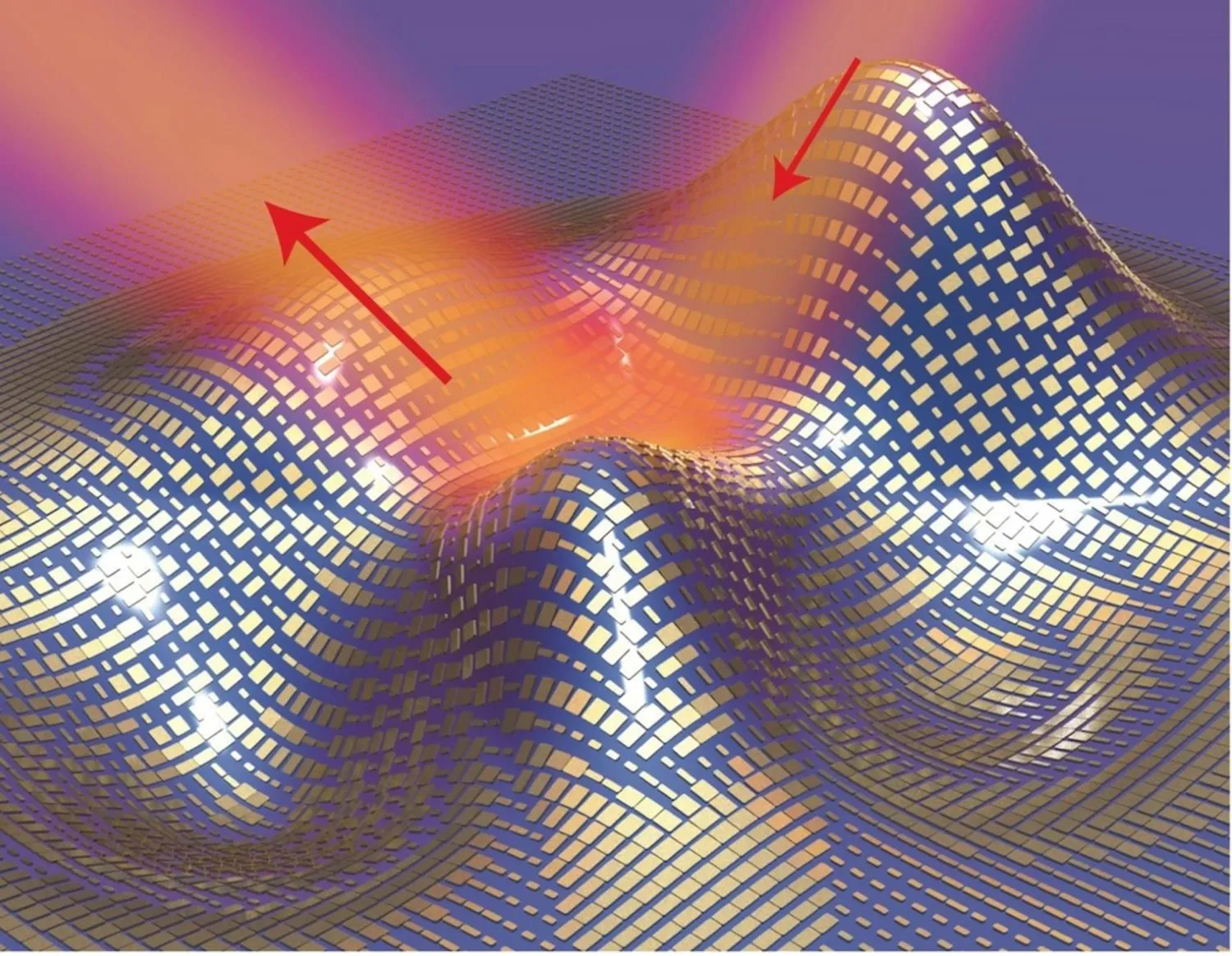
<p>Unlike other cloaking techniques that make an object disappear completely, carpet cloaking is about blending in. The idea is to make an object on a surface appear as if it is part of the surface itself. By manipulating how light reflects off a structured layer, scientists can make an object seem flat or unnoticeable. This technique is useful for concealing sensors, devices, or even military equipment in open environments.</p>
<h3 class="anchor anchorTargetStickyNavbar_Vzrq" id="acoustic-cloaking-silence-as-invisibility">Acoustic Cloaking: Silence as Invisibility<a href="https://blog.kamlatech.in/a-look-at-cloaking-technologies#acoustic-cloaking-silence-as-invisibility" class="hash-link" aria-label="Direct link to Acoustic Cloaking: Silence as Invisibility" title="Direct link to Acoustic Cloaking: Silence as Invisibility" translate="no">​</a></h3>
<p>Invisibility isn’t just about light—it’s also about sound. Acoustic cloaking is designed to prevent objects from being detected by sound waves, making them effectively invisible to sonar. Using acoustic metamaterials, scientists can bend sound waves around an object, preventing echoes or reflections that would give away its presence. This technology could be a game-changer for submarines, allowing them to avoid detection while navigating underwater.</p>
<h3 class="anchor anchorTargetStickyNavbar_Vzrq" id="active-cloaking-real-time-adaptation">Active Cloaking: Real-Time Adaptation<a href="https://blog.kamlatech.in/a-look-at-cloaking-technologies#active-cloaking-real-time-adaptation" class="hash-link" aria-label="Direct link to Active Cloaking: Real-Time Adaptation" title="Direct link to Active Cloaking: Real-Time Adaptation" translate="no">​</a></h3>
<p>Most cloaking technologies rely on passive materials that have fixed properties, but active cloaking takes a more dynamic approach. This method uses external sensors and energy sources to detect incoming waves and adjust the properties of the cloak in real-time. By actively canceling out incoming waves, this technology can adapt to different conditions, making it more versatile than traditional passive cloaking methods.</p>
<h3 class="anchor anchorTargetStickyNavbar_Vzrq" id="transmission-line-network-cloaking-hiding-in-a-grid">Transmission-Line Network Cloaking: Hiding in a Grid<a href="https://blog.kamlatech.in/a-look-at-cloaking-technologies#transmission-line-network-cloaking-hiding-in-a-grid" class="hash-link" aria-label="Direct link to Transmission-Line Network Cloaking: Hiding in a Grid" title="Direct link to Transmission-Line Network Cloaking: Hiding in a Grid" translate="no">​</a></h3>
<p>One of the more unconventional cloaking techniques, transmission-line network cloaking, relies on guiding electromagnetic waves through a specially designed grid of tiny circuits. When waves encounter this network, instead of scattering off the object, they are smoothly redirected, making the object disappear from electromagnetic detection. This method is particularly useful for broadband applications, allowing objects to be hidden across a wide range of frequencies.</p>
<h4 class="anchor anchorTargetStickyNavbar_Vzrq" id="innovate-with-kamlatech">Innovate with <a href="https://kamlatech.in/services/" target="_blank" rel="noopener noreferrer" class="">Kamlatech</a><a href="https://blog.kamlatech.in/a-look-at-cloaking-technologies#innovate-with-kamlatech" class="hash-link" aria-label="Direct link to innovate-with-kamlatech" title="Direct link to innovate-with-kamlatech" translate="no">​</a></h4>]]></content>
        <author>
            <name>Prashant Verma</name>
            <uri>https://www.linkedin.com/in/prashant3285/</uri>
        </author>
        <category label="Technology" term="Technology"/>
    </entry>
    <entry>
        <title type="html"><![CDATA[MetaMaterials]]></title>
        <id>https://blog.kamlatech.in/metamaterials</id>
        <link href="https://blog.kamlatech.in/metamaterials"/>
        <updated>2025-02-13T00:00:00.000Z</updated>
        <summary type="html"><![CDATA[Invisibility has always been a fascinating concept, from ancient mythology to modern sci\-fi movies. But did you know that scientists are actively working on real\-life invisibility cloaks? At the heart of this revolutionary technology lies a special class of materials called metamaterials—artificially engineered materials with properties that don’t exist in nature.]]></summary>
        <content type="html"><![CDATA[<p><img decoding="async" loading="lazy" src="https://blog.kamlatech.in/assets/images/metamaterial-b582392bd876a18a659a73fb928ba3d5.bin" width="800" height="737" class="img_ev3q"></p>
<p>Invisibility has always been a fascinating concept, from ancient mythology to modern sci-fi movies. But did you know that scientists are actively working on real-life invisibility cloaks? At the heart of this revolutionary technology lies a special class of materials called metamaterials—artificially engineered materials with properties that don’t exist in nature.</p>
<h2 class="anchor anchorTargetStickyNavbar_Vzrq" id="what-makes-metamaterials-special">What Makes Metamaterials Special?<a href="https://blog.kamlatech.in/metamaterials#what-makes-metamaterials-special" class="hash-link" aria-label="Direct link to What Makes Metamaterials Special?" title="Direct link to What Makes Metamaterials Special?" translate="no">​</a></h2>
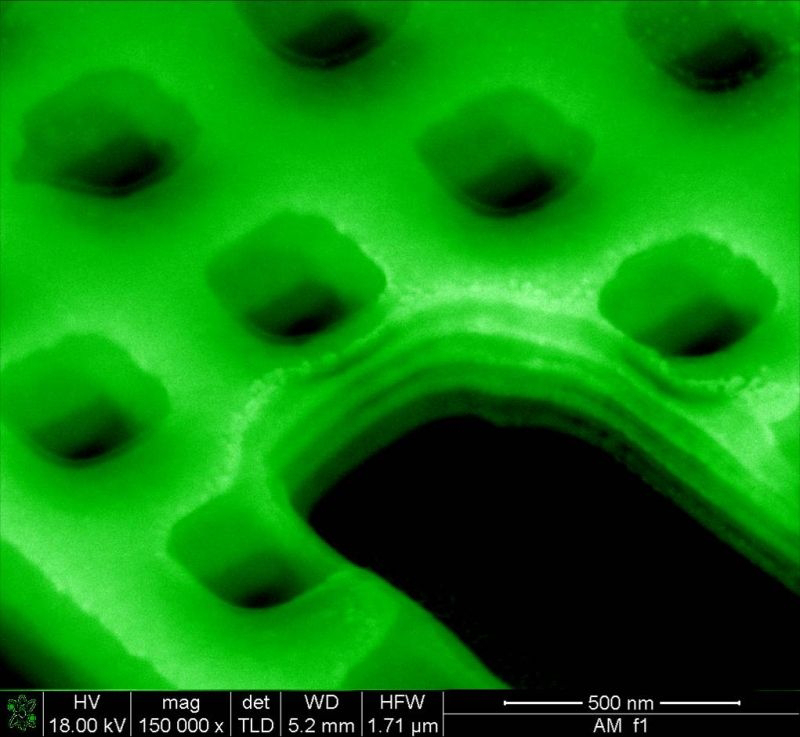
<p>Unlike natural materials, which have fixed properties, metamaterials are built using tiny, repeating structures called meta-atoms. These structures are smaller than the wavelength of the waves they manipulate, allowing them to bend, direct, or even block waves in ways never seen before. This unique capability makes them incredibly useful for controlling light, sound, and even heat waves.
One of the most intriguing properties of metamaterials is their ability to have a negative refractive index—meaning they can bend light in the opposite direction compared to normal materials. This property is crucial for developing cloaking technologies, making objects appear as if they aren’t there at all.</p>
<h2 class="anchor anchorTargetStickyNavbar_Vzrq" id="how-metamaterials-enable-invisibility">How Metamaterials Enable Invisibility<a href="https://blog.kamlatech.in/metamaterials#how-metamaterials-enable-invisibility" class="hash-link" aria-label="Direct link to How Metamaterials Enable Invisibility" title="Direct link to How Metamaterials Enable Invisibility" translate="no">​</a></h2>
<p>The concept of cloaking relies on manipulating light waves so they pass around an object instead of bouncing off it. This means that an observer (or a camera) sees only the background and not the object itself. Metamaterials make this possible in several ways:</p>
<h3 class="anchor anchorTargetStickyNavbar_Vzrq" id="transformation-optics--bending-light-like-magic">Transformation Optics – Bending Light Like Magic<a href="https://blog.kamlatech.in/metamaterials#transformation-optics--bending-light-like-magic" class="hash-link" aria-label="Direct link to Transformation Optics – Bending Light Like Magic" title="Direct link to Transformation Optics – Bending Light Like Magic" translate="no">​</a></h3>
<p>Through advanced mathematical transformations, scientists can design metamaterials that guide light around an object. Instead of hitting and reflecting off the object, light smoothly flows around it, just like water moving around a rock in a river. As a result, the object appears invisible to the observer.</p>
<h3 class="anchor anchorTargetStickyNavbar_Vzrq" id="impedance-matching--eliminating-shadows">Impedance Matching – Eliminating Shadows<a href="https://blog.kamlatech.in/metamaterials#impedance-matching--eliminating-shadows" class="hash-link" aria-label="Direct link to Impedance Matching – Eliminating Shadows" title="Direct link to Impedance Matching – Eliminating Shadows" translate="no">​</a></h3>
<p>Even if light is bent around an object, it can still create small distortions or reflections, making the cloak imperfect. To counter this, metamaterials are engineered to have an impedance (a material property related to wave transmission) that perfectly matches the surrounding environment, ensuring that light waves pass through seamlessly without any telltale signs.</p>
<h3 class="anchor anchorTargetStickyNavbar_Vzrq" id="beyond-light--cloaking-sound-and-heat">Beyond Light – Cloaking Sound and Heat<a href="https://blog.kamlatech.in/metamaterials#beyond-light--cloaking-sound-and-heat" class="hash-link" aria-label="Direct link to Beyond Light – Cloaking Sound and Heat" title="Direct link to Beyond Light – Cloaking Sound and Heat" translate="no">​</a></h3>
<p>While most research focuses on making objects invisible to light, metamaterials can also be used for acoustic cloaking—making objects undetectable to sonar by bending sound waves around them. There are even designs for thermal cloaking, which could help objects evade infrared cameras by redirecting heat signatures.
Would you wear an invisibility cloak if it became available? Let us know your thoughts in the comments!</p>
<h4 class="anchor anchorTargetStickyNavbar_Vzrq" id="innovate-with-kamlatech">Innovate with <a href="https://kamlatech.in/services/" target="_blank" rel="noopener noreferrer" class="">Kamlatech</a><a href="https://blog.kamlatech.in/metamaterials#innovate-with-kamlatech" class="hash-link" aria-label="Direct link to innovate-with-kamlatech" title="Direct link to innovate-with-kamlatech" translate="no">​</a></h4>]]></content>
        <author>
            <name>Prashant Verma</name>
            <uri>https://www.linkedin.com/in/prashant3285/</uri>
        </author>
        <category label="Technology" term="Technology"/>
    </entry>
    <entry>
        <title type="html"><![CDATA[Cloacking What?]]></title>
        <id>https://blog.kamlatech.in/cloacking-what</id>
        <link href="https://blog.kamlatech.in/cloacking-what"/>
        <updated>2025-02-09T00:00:00.000Z</updated>
        <summary type="html"><![CDATA[ThermalCloacking]]></summary>
        <content type="html"><![CDATA[<p><img decoding="async" loading="lazy" alt="Thermal_Cloacking" src="https://blog.kamlatech.in/assets/images/thermal_cloacking-3f708aefa18b4f07f60173199734d1f7.webp" width="800" height="608" class="img_ev3q">
When we think of invisibility cloaks, the first thing that comes to mind is making objects vanish from sight using advanced optical tricks. But cloaking technology is not limited to bending light. Scientists are now exploring ways to cloak objects from sound, heat, mechanical vibrations, and even quantum matter waves. This interdisciplinary field is pushing the boundaries of physics, engineering, and materials science to develop real-world applications beyond science fiction.</p>
<h3 class="anchor anchorTargetStickyNavbar_Vzrq" id="cloaking-sound-the-science-of-acoustic-invisibility">Cloaking Sound: The Science of Acoustic Invisibility<a href="https://blog.kamlatech.in/cloacking-what#cloaking-sound-the-science-of-acoustic-invisibility" class="hash-link" aria-label="Direct link to Cloaking Sound: The Science of Acoustic Invisibility" title="Direct link to Cloaking Sound: The Science of Acoustic Invisibility" translate="no">​</a></h3>
<p>Imagine being able to silence an object completely, making it invisible to sound waves. This is the goal of acoustic cloaking, which involves designing materials that guide sound waves around an object rather than letting them bounce off it. The result? The object becomes undetectable to sonar or human hearing.
Potential applications for this technology are vast. It could be used in military stealth technology to make submarines undetectable underwater, or in architecture to create ultra-quiet spaces by blocking unwanted noise. Scientists are also looking at how this technology can improve soundproofing in buildings and reduce mechanical vibrations in sensitive instruments.</p>
<h3 class="anchor anchorTargetStickyNavbar_Vzrq" id="hiding-from-vibrations-elastic-cloaking">Hiding from Vibrations: Elastic Cloaking<a href="https://blog.kamlatech.in/cloacking-what#hiding-from-vibrations-elastic-cloaking" class="hash-link" aria-label="Direct link to Hiding from Vibrations: Elastic Cloaking" title="Direct link to Hiding from Vibrations: Elastic Cloaking" translate="no">​</a></h3>
<p>Not all waves travel through air or water—some move through solid materials. Elastic waves, which cause mechanical vibrations in structures, can also be manipulated using cloaking principles. This is particularly useful in earthquake engineering, where scientists are working on materials that can shield buildings from seismic waves, reducing damage and improving safety.
Elastic cloaking is also being explored in industrial machinery, where it could help minimize vibrations that lead to wear and tear, improving the lifespan and efficiency of mechanical systems.</p>
<h3 class="anchor anchorTargetStickyNavbar_Vzrq" id="thermal-cloaking-controlling-heat-flow">Thermal Cloaking: Controlling Heat Flow<a href="https://blog.kamlatech.in/cloacking-what#thermal-cloaking-controlling-heat-flow" class="hash-link" aria-label="Direct link to Thermal Cloaking: Controlling Heat Flow" title="Direct link to Thermal Cloaking: Controlling Heat Flow" translate="no">​</a></h3>
<p>Heat behaves like a wave in many ways, spreading through materials and interacting with its surroundings. Scientists have discovered that it's possible to redirect heat flow using specially designed materials, effectively cloaking objects from thermal detection.
This technology could revolutionize energy-efficient buildings, where materials could be designed to trap heat in winter or block it in summer, reducing energy costs. In electronics, thermal cloaks could help manage heat dissipation, preventing overheating in sensitive devices like computers and smartphones.
Another exciting application is in military technology, where thermal cloaking could be used to hide objects from infrared cameras, making them invisible to heat sensors.</p>
<h3 class="anchor anchorTargetStickyNavbar_Vzrq" id="the-future-of-cloaking-quantum-and-matter-waves">The Future of Cloaking: Quantum and Matter Waves<a href="https://blog.kamlatech.in/cloacking-what#the-future-of-cloaking-quantum-and-matter-waves" class="hash-link" aria-label="Direct link to The Future of Cloaking: Quantum and Matter Waves" title="Direct link to The Future of Cloaking: Quantum and Matter Waves" translate="no">​</a></h3>
<p>At the smallest scales, even particles behave like waves. In the world of quantum mechanics, scientists are now theorizing ways to cloak matter waves, which describe the motion of electrons and other subatomic particles. If achieved, this could have groundbreaking implications for quantum computing and secure information transfer, where controlling the movement of particles is critical.
While quantum cloaking is still in its early stages, researchers believe it could one day lead to new forms of encryption and information processing, making it a fascinating area of study.</p>
<h3 class="anchor anchorTargetStickyNavbar_Vzrq" id="how-does-cloaking-work-across-different-waves">How Does Cloaking Work Across Different Waves?<a href="https://blog.kamlatech.in/cloacking-what#how-does-cloaking-work-across-different-waves" class="hash-link" aria-label="Direct link to How Does Cloaking Work Across Different Waves?" title="Direct link to How Does Cloaking Work Across Different Waves?" translate="no">​</a></h3>
<p>Despite the differences in these waves—light, sound, heat, and quantum matter—the fundamental principles of cloaking remain similar. Scientists use:</p>
<ul>
<li class="">Transformation Methods: Mathematical techniques that allow waves to be bent around an object, making it effectively invisible.</li>
<li class="">Metamaterials: Specially engineered materials that control how waves interact with them, allowing for cloaking effects.</li>
<li class="">Wave Manipulation: Adjusting the properties of waves to ensure they pass around an object without revealing its presence.</li>
</ul>
<h3 class="anchor anchorTargetStickyNavbar_Vzrq" id="the-road-ahead">The Road Ahead<a href="https://blog.kamlatech.in/cloacking-what#the-road-ahead" class="hash-link" aria-label="Direct link to The Road Ahead" title="Direct link to The Road Ahead" translate="no">​</a></h3>
<p>Cloaking is no longer just about making things invisible to the human eye—it’s about controlling how all types of waves interact with objects. As research advances, we can expect breakthroughs in stealth technology, soundproofing, earthquake protection, and even quantum computing.
The idea of invisibility is shifting from science fiction to scientific reality—and the possibilities are endless.
Would you want an invisibility cloak that shields you from heat, sound, or vibrations? Share your thoughts in the comments below!</p>
<h4 class="anchor anchorTargetStickyNavbar_Vzrq" id="innovate-with-kamlatech">Innovate with <a href="https://kamlatech.in/services/" target="_blank" rel="noopener noreferrer" class="">Kamlatech</a><a href="https://blog.kamlatech.in/cloacking-what#innovate-with-kamlatech" class="hash-link" aria-label="Direct link to innovate-with-kamlatech" title="Direct link to innovate-with-kamlatech" translate="no">​</a></h4>]]></content>
        <author>
            <name>Prashant Verma</name>
            <uri>https://www.linkedin.com/in/prashant3285/</uri>
        </author>
        <category label="Technology" term="Technology"/>
    </entry>
    <entry>
        <title type="html"><![CDATA[How to? Cloacking]]></title>
        <id>https://blog.kamlatech.in/how-to-cloacking</id>
        <link href="https://blog.kamlatech.in/how-to-cloacking"/>
        <updated>2025-02-06T00:00:00.000Z</updated>
        <summary type="html"><![CDATA[bendinglight]]></summary>
        <content type="html"><![CDATA[<p><img decoding="async" loading="lazy" alt="bending_light" src="data:image/webp;base64,UklGRogUAABXRUJQVlA4IHwUAACQ6wCdASrqApEBPm02l0isNTGoIzgpQqANiWlD5NlCaBe4I6QUvwri19/ehLf7cX+Pr+3wXm/6N81a1fEKtx2b+Df/z1f+12jV+5gRvPtFAfJ+jlFHHqcrEGka0mJjLuOloK51N3/vDXe2LcwY5e8zhLBLe5O1BXG90bmdh87gtX4TbLYE82mTaXggkU1GTvGJt52+1/ClWT5AhYG6XdqF0VrBN/suNoEaThMk0scfaXh8missUEX6g30KRLwrJNK9hMBXUiBuuu1qJxoY4RAWjMQ9qvSA4f6kERrZBYkXYVIU3YA5PrppzHnUVf2JTGqrHyRZHSE/BPVWd8M/vSobvPCr5Cb5ORkkqH00P1awoi11/gjCwDSFg0yVkB8xoYTyigW1GgsXwiP1f1O6Huz7HcQOJQa2mrfV8Z9kxaczgTCwact4BhVBiv811NPaEXaz0rpbRpbwjrLJBGRb9ZnalfL1HxDK/d3YcHS/Fvtik1sscNQainkMDCvvkRd4UCui1c7SFHWLv//CIsGkk1GmA2xXxW5lhxvTK19/l/gKkgCDCYT34uPqvV8md2TF0ASVIkHAK1qrj2Na62Fjfbc+Qa7VNpBAEger5wCryPm4nA0Bf0heBGOQlWOEDNphqrCaa0FqEowp2J8DcVbr3YYhUIZ68HVZ6uqY8jXQG1Y5WZBEOvstbWE+TJ/5AhsAotN/daPQNjr2S1ipAIG1IJEWyUxFY7sPuEVCafPOJXspU2JoCHsRdFJf6YwHeIOZIqW+jfrsBb1zuOn+YqRWjhtDfaUBSt/QflOBFpzuSjNmXaR9Xx9qfKDjvI1zJzbCu022Gt04m77P0pbcOKuBU+MtO+O+CTi3bFQXhCofgWpcgx7e+gAv4vp8Olc7SbiiDp445PnvcSfutPyxgMG9XltLCpIc4ajQ/AN34VNJ0wFMlj8K0zX8NPyQ1fy+D8d5+MJ7+y9GEVcpOTCVo0ldVTL9vu/mC1bKLrlCx34F86jpKSqnOskPZULz48ECBNDhnbp5W7buIbp8Xm2wTDOun4SrJlU2zt5UuSEMShmPRHski6mEel3l0MOLtfAW8zK26hY8UghG8MS1+IVbkNozmXAdk83qKMvvMOMAi1L0bJYPTPvVMlfnXVxR1OEmLnQTLZJJNkHRNu480OeI8AZgQ11qxs2qOXS6SjsUQjflEjo+FDEuMH5SYb/XlPcrc5ThW4p03EVPw0+c/YbL8xlLWYOvNacyYLiqfszYDjKjSJ00PK0PSR8mUzTh47HfWhCJDEgKDkPaIanCUdatnF17zjiAXnyyFmBNKiz9yk/xX8daL4pKPw5Js8C4AL8es8pWz07lRp5clla1rDM/HXZOUhXH4Kr5P7QB4qcuLLaByOoMOWT6wXHtt8kXIRolFMEtzAl11LEVphoE9sTlhmoDTfkLfZQhvjmYPU1C3MtfHl9dDzsE0DxRGLc+taQlufpGOf3M5BDxkMVms//oJ3HQgw9Upv/KSaP9EUfABaICO0nxLxQUm8oxdELt+a/rkIhMWMT2UPIOhvSjaCjpP4ADWAr/YKZQEhbmYlHB7HuNMlBXBcF5NzZXPkt4zkOxSpynYNUOLKnuxF86+0UOidA56JeXtFMWRUY6XoVmmyRbPUBGg6P0DoEKDG78CNG1BRhffjTwKnMy4r5QumAUmwgFMEa53411X9MFPH5JJ9e0bqnr9JkxRP9ayQRAwUrOk5MOWQcons5vNjGXfWpcZ/oh3NfJtC/uEr04/lmHxISu6Ro4+T5Yao8+cDmPNZn1AS53NHeeNXpyFt9NFMK23ica6vbbnQXhBv4f72IMevGyWLApvnwFa8+KFIYBNYJYguNCqvS8KDKcX6wDYp8GMhFq+prXB7gtiDF3mqn4+NusIVEChEdyM8y1KcgSqaw4+RsSAq1xRz4HFflg7FpkDPPfo4zlnYBKWBb3KDFz7v1y/X17D0eeZJ359bfBAMTT8hGU7v87cvNyOk31a1bLXRAZJpMEkWnDCbdRllK1YY6CTUwu5S3EaWLNhEda9Jki1yYhd7gp8MPCFLFmXyltj6i8/rOher2QluhAe7JuR5fQR4wj4XbQqcj9YA7ENIqQqo1p18Jd6wBDXBcUkHG9BhYaJ6xq9Lh8Ch5t4jBgIG3I/CjThwipNG24v+enli/MO5UOVGLmuuFSxEU0DdmLSbgEWh5NhOciOdC+uFsWxDWQwOY63e0avx5Nwfs2jRdteT2xZMAmX2PtXryvMMczzrhAo9GIL88IPfFJYGp9doiljn3q2W9iFeknVTyArPh9CKaRgGx36p1NDPBZpiMpTSpsHlX6IHABrM515HG8dS2a0lYPxyUm1JroEErwm65CLSSIvS+jUQXlw0lhP3AZWz5d/a+XJYSPMNfiq6b9O8S3GfMdSK8bztIVQDZcSk55DnkVO6wXMFsptRYUEMBJcMe/hSuTxHPvfr/XmBH+FVGz9LUItxC7ogj5kKvHsv9TREp3kL1urMpnXA6GD5NNUbtPJDIe1BR5/AAA/unwbqZTRRBMvC7gnA10rI5eVNI+ZuEN7EjCm4bZGireRIKC9Xme7IjvSDfXa9KSL5fNHTHGH4Bm0npgHpwkXeyYza6acMfYwuLkRCwBMFx42l2Tr7CmyCzc2GRL/NrmPs1lgqmuCwUaOYVHDjhe9VXwqAHBUuw/ZgzUNj3GuzUl67c7aZ6jZ5KdrPW0/CCD+D+Eb4U+EzQUyG6fxQ+UEGZuf/66WoKup1ukMGm+dA8Ov+fzmU8gsVnjeKXrOMFWHtfBb4OcRxtx2azi4UibcSEt9nLaNRe/MqHW56vRerliKCuTq3O/KMybdGV8HLZ6m+wgn5yY3Vn2H6fDPTVm0byjOQnHxGWjUTtX5r/BD37hYxFuyNPF0vdx6CHJoAdoxVR4ylTjLeIgzwGlRd8mOupxwZ8Ofle8B99RoqsOE26VxH688YGlH88F0guCqBprk/ikDzD44/AIRiDXs4EL0W5qXF4SmPoG5FaqGofOjpqboaw6OQKAP0cajH2dHuwq6KN9mYMsooQtrRTSSfkSpYECsU+d4EuGoZnldS48D6eu8mCGIlIzKjGgKLc1ZdY8RshH59pmv4T2zX0C56d6SUw6eWILIfxpqHf3H1RGcWxWVYhrTI2gE5foLrIpE3l/WmzbsrVzZSmsGhWW3mQPgp4EXQIc7RUpJVAFKYAJ/t25V41IPmaTDNe3vCvh4DHhoDD4Kq1Co0wg/LGzEWRWBEDhySDxYnQs22iqmGBYZPQqUTxu1qW2TtGIHjKb+Qbv5qqnAdqM7Hp8T9fbDtpyg1rn6jtSgxSaiuHHff8oQ6DX2MzHHLj1/FmOEGPphWDf8C5cM1pcqcmnj1mRJZx9nr3/9kasiYpRBthqd3Wfh9w4+Non2rH3LgfkPEtnrlh9XKmBeujvgQ7XMKqMpv6y2W4EtxdK6tMjAHoJ1jjzDjkZ1yrvjAP/Iy+ayxtYvYF6MyvGUZGB/TyTyVh+1VBYURb9bRvknjTbHtBBZOgY86nUdEKXi0px9r03Mybx4fSTfogZG+CULIeNwBY8fIlrch6dxjXuW2H89Vcf9NMSOu0t8XmL+ej8MqXreYmMUmeYS0lWYcigMCyk8vFCcAnUTHa4Ckt6toay+GBf70/lEMRtO8bZklnNUQGhhkzTW5RhzUlqzt0VAA7FBc/PhZp1NSh7Myx6uKOmkxrxxk2/KCzClbUQuzIpf6iSxcySPiwgom7alGjmZq8p8kseJgL8fRHzUdmPjBVNOgLOEZ1nHLuPIcQLkhsLEKynxfHIdqrJTwdYnIKJha7/PjGPgKIdE6y6b57i70CDPT0KzdAg68m48NklshSfu0XYzjquBuPu3CMOelqqxj7GSb7Ejzx0ZmdT7qxrrJiDYghHFJlw0iM0+8AQxB5jKYey8/4kvs5C9IKA+NnhqCvqlHPbJf7ynfMMcpPJftc199Jii+jisv4OKYDzgULb1H4z3je+5zbx2WtSMPNrF/gqr52C+Y/b5+fGpQ1ueJoFkmAzlF329QecS1uMJ+kGHkAuXDtdO8+WrEEM8xO1Jm5CXPYrCZthq71XMyLvZL4/f8roUQrfMCtQI8/5LvRwCxansik+oUV9NJjMzW2C08c6/N9NLQ6NCEv3GJfhd7wlqY9IExENQdCuWi8jl1mBcohsk/mVjdKzrCqsubI0s2ccBBKo75/82YtmGsYoPobzG/AZMgOsIM8/6uaQBdkaSmhWpaYwDKiWd+RrnZTJEmmvt2nX4Fo1mPP/34xuwSTE0H2xm/GGRugskleREynMJRR5JP1CXRpCuT1BNJlodGXFPBT0kCcFifR9r0GqS+FnAAwzHWbSarx+Ega5dcCxb66qAeM/bCCII2JcTiFjOOWqQA/lfhlkhTyQB6F8jMqY7ZWYBrv6VLFI/ow1Zr16kfbonniKYGW0Nx8VI12KfbQxUOywNqThG1qHXX/i/wfvhJeB7PLIYikRqAYycDYpoSqg2Jz6ECe5OnZQHOt0Jg9GYVtR+7fQKHXmZp+O/bvWFn0E6ycYmTFBVL1hdTVbm33gcQRIw/KsOBnUjMOUpxQHwjgGuXXoDAVQQfc0/+Rm9RYbnqJiJrexE5+N4duGbrnlZmH4bKN711gy+j/UOtFXll8tkzFLCRNcdabYHaSx5X524xrQ0RBhDZuDGYVDa9kzFAOovEm3VRtJpaj4EmqzKw3FgUGWIylZbPLqmnVvBd4kiEJIUTJRBNFSmaPyyeFPV6KlRQJqhYkq0UCDVJ2/Kv8jfI7TVimBBOLUcTFizD0wMlt5l0IxZEGSCf+EX2rjdCVurQdlHYXEnTkbbajMnLPuJOZ52x2k0ZggVfGbh6BxLUCMQLZkRxD/qiMlo6gZAUaSkMcjoTUlvhgauUo7Sc8bqTy+hos/lh9elWFjjwobWY3+1yKOAlJb29W2CJxE7/3HwW1Aut/KyR3rrwuQtSlLwKvtK0bhMZYY0wUfe0uj9SW0/00qUrmhSwlmHkFGWSrjaV6rKaa0Y/oS4ZXHHkuK4o74XR9OalZUvCoK1jKX4Uor+REJ/RdY30jUd+R/jNa+j4zY0Sy4/4Jg5PoGePmaZdor3KtmWA92mocjQtKTQGW1jxTNHcj69IoPxsTqRKHBBbKXqrEBD5y7AUTBYFvoZKtl41PPmSF+1eMZC+QsBeEzvcTdP5IGMA3yJGQWdBv2GcHMF8avLwiJ0YBd/PnZH8ASzbUYxV66nwGPBT6Sy79wVgF1olftKin0Q17ZnBuE+eFmaIkiRPk5h64PkGdqcDLpcsDin6Lct9NkygSLrBw33ZaCKLx2tRL+XVLXOKZ0auXwlS92LjHh8tITfvZzcTIK3Vp/ZFPHTgfS9hq2B56s5PrnIyBB7WnGAieYob1OHuE5oou+S1YFUdvrXK2ucmux92zfXH3HkCk8x7iWdYjdujWMASBdvjr2MPZ24tVfify9oA0LFOFwcrNKZeCq7wRo/8fW9maeLwFq2KKRRrNx7VApmNitbpLDI7Kj1FmWTl2+aWCk9qfEyy9zPFXocI94UoKU6DYJ4GG4mBPtvLKkmaU8O9NGehIokZ4lrq6PF8srfcVYwtRo18HZG3a1nrntq7pCm96UQ82p8XGW7gsw8Z4Stl+YVATS71dxNmNNODNTXHH+wrkbKW5XD/tk2Bwc2lYQZ/HzhnjWRgi7O/0vbH7/PAw1gilceaZ5ve+LRmYc5KOpBg91WR7imzkMN38biqk+0TiB+yKxsjheZCBxWt5THtNVgK2/4OPbuqHhWtWQ6csIF3wk8wJRNy/oaeg7LmL3qYnUvTYPhpRpzSKQwpFXj4ZhGY8/PLb27aj/7DSsX+F860ATxXq2zhkra0X1lUuCiepXef3WChcCoUWV/wk5LFScmQwxNDAFAOw3M7SDqEQ6KUjjFebG2CTpM+UjOrFwV4cqXcoW01ppplxW+e18msb4Jwwa+WDG9RgJ0/30dCB+LT5IRDB0VKewgDWLnvnZbF6SebqwdTDcla7zRI79MDKhillJWhIG6HAxxT+nYRw6dLH1lNUXHrdMak8ImFNqvkIBzhNt1badno94jAjVnzYkJ+nbCCAZwH7LaCEZOD5zm2Awvez95Sc0jmx2q1RjO2IPV097/xfXnWyG4+0p9JlKk+jEuZjMw3QWekwl6VJjJS59uaBtiZqo/AOzdxxeJnnUJYGwjTNA0JhhnZD1YZl3xiqLna6iPDx2zafDvjtC+CvEiUEjtbO4U8DbFJvuHReiIOrc9KtYmT3Y9vhqZWyswEsR0XZN0CJmkkeleBpklE5SdcJSXYjTmR0hhF0GqEd2cxoMvFYrCqcLao6XCGb8yhTVM/VL8w5Mr6kjwUxolqnoPJVY+sfHbulWhiGxxbxE5A9MmKBdU8BZu4iEw83LjblQmIMHsu82We/NYQD8N5VxE3xlJA9UhaNN5R+7MOtmf/zQqZIj+eVjbvl6pJ6wN1emFd0a4WIlN7C0XnCwGFChdDCiNYI8Y1LcjoBgmRfEqQGCnaFQiPYY2fyXcI4wzZQXBFtZuBTD9M/xmXByn/6SIdRj88WYi8V2sEuqv5qsk6zQHb74waV2m6/+IKYMe9n1uVxs6/T/orjckCQ1X0JNQSSmzePWZIVpIS1G1v2OHOmih8dSSj3xngriAWIQDUDKRtoragWEKd6c5lhTbzdUmDJWxNpaM9oEiE/eRRHrQm0gwEn615dG8Bb1CQ9YfuKsqAeKUUV1BDG4a2MyPtTIytYUrGZl8AAlXpSKL7hcIb5Dvp0M9KvUX8eJgoVZSabIonNYVIn3MAeepNyyum2slVNbzqmqxQJeLHe/etIMFA3C+oIDHCRDtD6cD2p7kUOKEb0MgcuAZigCt47yXeoYbun4igw9DXTRuUPh56rnMNEL23xPW+l/rH0xr4L/gLMNCHp+hoEoHroVspilRcnPNDzsuDP4BC/24GReCwWKUp5pDrwJoLE6szp/WuUcAAA=" width="746" height="401" class="img_ev3q"></p>
<p>We’ve all seen movies where characters suddenly disappear using some kind of invisibility cloak. But in reality, scientists are working on several high-tech methods to make objects invisible—not by magic, but by manipulating waves like light and sound. Here’s a quick look at the different ways cloaking is being explored:</p>
<h3 class="anchor anchorTargetStickyNavbar_Vzrq" id="transformation-optics--the-art-of-bending-light">Transformation Optics – The Art of Bending Light<a href="https://blog.kamlatech.in/how-to-cloacking#transformation-optics--the-art-of-bending-light" class="hash-link" aria-label="Direct link to Transformation Optics – The Art of Bending Light" title="Direct link to Transformation Optics – The Art of Bending Light" translate="no">​</a></h3>
<p>This method uses special materials called metamaterials to bend light around an object, making it effectively "disappear." It’s like diverting traffic around a roadblock so smoothly that no one even notices the block was there in the first place.</p>
<h3 class="anchor anchorTargetStickyNavbar_Vzrq" id="plasmonic-cloaking--using-tiny-particles-to-hide">Plasmonic Cloaking – Using Tiny Particles to Hide<a href="https://blog.kamlatech.in/how-to-cloacking#plasmonic-cloaking--using-tiny-particles-to-hide" class="hash-link" aria-label="Direct link to Plasmonic Cloaking – Using Tiny Particles to Hide" title="Direct link to Plasmonic Cloaking – Using Tiny Particles to Hide" translate="no">​</a></h3>
<p>This technique uses materials that can interact with tiny oscillations of electrons (called surface plasmons). It works at extremely small scales, helping objects become invisible at the nanoscale. This could have applications in advanced optics and even futuristic displays.</p>
<h3 class="anchor anchorTargetStickyNavbar_Vzrq" id="mantle-cloaking--the-simpler-alternative">Mantle Cloaking – The Simpler Alternative<a href="https://blog.kamlatech.in/how-to-cloacking#mantle-cloaking--the-simpler-alternative" class="hash-link" aria-label="Direct link to Mantle Cloaking – The Simpler Alternative" title="Direct link to Mantle Cloaking – The Simpler Alternative" translate="no">​</a></h3>
<p>Instead of bending light completely around an object, this method involves covering the object with a special material that cancels out the waves hitting it. It’s a bit like noise-canceling headphones—just for visibility instead of sound!</p>
<h3 class="anchor anchorTargetStickyNavbar_Vzrq" id="active-cloaking--smart-adaptive-invisibility">Active Cloaking – Smart, Adaptive Invisibility<a href="https://blog.kamlatech.in/how-to-cloacking#active-cloaking--smart-adaptive-invisibility" class="hash-link" aria-label="Direct link to Active Cloaking – Smart, Adaptive Invisibility" title="Direct link to Active Cloaking – Smart, Adaptive Invisibility" translate="no">​</a></h3>
<p>Unlike passive cloaks that rely on fixed materials, this approach uses materials that dynamically change in response to incoming waves. This makes it more adaptable and could be useful in real-world applications like defense and stealth technology.</p>
<h3 class="anchor anchorTargetStickyNavbar_Vzrq" id="acoustic-cloaking--hiding-from-sound-waves">Acoustic Cloaking – Hiding from Sound Waves<a href="https://blog.kamlatech.in/how-to-cloacking#acoustic-cloaking--hiding-from-sound-waves" class="hash-link" aria-label="Direct link to Acoustic Cloaking – Hiding from Sound Waves" title="Direct link to Acoustic Cloaking – Hiding from Sound Waves" translate="no">​</a></h3>
<p>While most cloaking research focuses on light, scientists are also working on ways to make objects invisible to sound waves. This could be a game-changer for submarines, helping them stay undetectable from sonar detection.</p>
<h3 class="anchor anchorTargetStickyNavbar_Vzrq" id="matter-wave-cloaking--a-quantum-level-disappearance">Matter-Wave Cloaking – A Quantum-Level Disappearance<a href="https://blog.kamlatech.in/how-to-cloacking#matter-wave-cloaking--a-quantum-level-disappearance" class="hash-link" aria-label="Direct link to Matter-Wave Cloaking – A Quantum-Level Disappearance" title="Direct link to Matter-Wave Cloaking – A Quantum-Level Disappearance" translate="no">​</a></h3>
<p>This method applies to quantum physics and involves hiding objects from matter waves (like electrons). It’s still in the early research stage, but it could have fascinating implications in quantum computing and materials science.</p>
<h3 class="anchor anchorTargetStickyNavbar_Vzrq" id="liquid-surface-wave-cloaking--invisible-on-water">Liquid Surface Wave Cloaking – Invisible on Water<a href="https://blog.kamlatech.in/how-to-cloacking#liquid-surface-wave-cloaking--invisible-on-water" class="hash-link" aria-label="Direct link to Liquid Surface Wave Cloaking – Invisible on Water" title="Direct link to Liquid Surface Wave Cloaking – Invisible on Water" translate="no">​</a></h3>
<p>Ever thrown a stone into a pond and watched the ripples spread? Scientists are working on ways to stop those ripples from revealing floating objects. This could help ships or small devices remain undetected on water surfaces.</p>
<h3 class="anchor anchorTargetStickyNavbar_Vzrq" id="the-future-of-cloaking">The Future of Cloaking<a href="https://blog.kamlatech.in/how-to-cloacking#the-future-of-cloaking" class="hash-link" aria-label="Direct link to The Future of Cloaking" title="Direct link to The Future of Cloaking" translate="no">​</a></h3>
<p>These cutting-edge techniques show that invisibility isn’t just science fiction anymore. While we’re still far from having an actual invisibility cloak like in Harry Potter, scientists are making incredible progress in fields like defense, optics, and even medical technology. Who knows? In the future, we might see cloaking technology in everyday life!</p>
<h4 class="anchor anchorTargetStickyNavbar_Vzrq" id="innovate-with-kamlatech">Innovate with <a href="https://kamlatech.in/services/" target="_blank" rel="noopener noreferrer" class="">Kamlatech</a><a href="https://blog.kamlatech.in/how-to-cloacking#innovate-with-kamlatech" class="hash-link" aria-label="Direct link to innovate-with-kamlatech" title="Direct link to innovate-with-kamlatech" translate="no">​</a></h4>]]></content>
        <author>
            <name>Prashant Verma</name>
            <uri>https://www.linkedin.com/in/prashant3285/</uri>
        </author>
        <category label="Technology" term="Technology"/>
    </entry>
    <entry>
        <title type="html"><![CDATA[Cloaking vs. Invisibility]]></title>
        <id>https://blog.kamlatech.in/cloaking-vs-invisibility_0</id>
        <link href="https://blog.kamlatech.in/cloaking-vs-invisibility_0"/>
        <updated>2025-01-26T00:00:00.000Z</updated>
        <summary type="html"><![CDATA[Invisible]]></summary>
        <content type="html"><![CDATA[<p><img decoding="async" loading="lazy" alt="Invisible" src="https://blog.kamlatech.in/assets/images/invisible-8fb2a75f9b4b5a37e0be293ffeb2e687.webp" width="1024" height="768" class="img_ev3q"></p>
<p>We often use the terms cloaking and invisibility interchangeably, but did you know they have slightly different meanings, especially in the world of science and technology? Let’s break it down in simple terms.</p>
<h3 class="anchor anchorTargetStickyNavbar_Vzrq" id="cloaking--the-science-of-hiding">Cloaking – The Science of Hiding<a href="https://blog.kamlatech.in/cloaking-vs-invisibility_0#cloaking--the-science-of-hiding" class="hash-link" aria-label="Direct link to Cloaking – The Science of Hiding" title="Direct link to Cloaking – The Science of Hiding" translate="no">​</a></h3>
<ul>
<li class="">What is it? Cloaking is a technique that makes an object undetectable to certain types of waves, like light, sound, or even electromagnetic waves. It’s done using advanced materials that bend these waves around the object.</li>
<li class="">How does it work? Think of it like water flowing around a rock in a river—the rock is there, but the water moves around it smoothly as if nothing is in its way. Similarly, cloaking bends light or sound around an object, so it doesn’t get detected.</li>
<li class="">Where is it used? The biggest applications are in military stealth technology, advanced sensors, and even futuristic telecom and imaging systems.</li>
</ul>
<h3 class="anchor anchorTargetStickyNavbar_Vzrq" id="invisibility--the-bigger-picture">Invisibility – The Bigger Picture<a href="https://blog.kamlatech.in/cloaking-vs-invisibility_0#invisibility--the-bigger-picture" class="hash-link" aria-label="Direct link to Invisibility – The Bigger Picture" title="Direct link to Invisibility – The Bigger Picture" translate="no">​</a></h3>
<ul>
<li class="">What is it? Invisibility simply means something can’t be seen or detected. It’s a broader concept that includes cloaking but also things like blending into the background (like a chameleon) or becoming invisible under certain lighting conditions.</li>
<li class="">Perfect vs. Practical Invisibility: True invisibility (where an object is unseen from all angles and in all types of light) is almost impossible right now. But researchers are working on practical invisibility solutions that work in limited conditions.</li>
<li class="">Everyday Examples: Camouflage in nature (like tigers blending into the jungle) or even optical illusions where objects "disappear" against certain backgrounds.</li>
</ul>
<h3 class="anchor anchorTargetStickyNavbar_Vzrq" id="cloaking-vs-invisibility--the-key-difference">Cloaking vs. Invisibility – The Key Difference<a href="https://blog.kamlatech.in/cloaking-vs-invisibility_0#cloaking-vs-invisibility--the-key-difference" class="hash-link" aria-label="Direct link to Cloaking vs. Invisibility – The Key Difference" title="Direct link to Cloaking vs. Invisibility – The Key Difference" translate="no">​</a></h3>
<p>Cloaking is a method used to achieve invisibility by bending waves around an object. Invisibility, on the other hand, is the end goal—whether through cloaking or other tricks like blending in.
So, while true invisibility like in superhero movies is still a dream, science is making exciting progress! Who knows? Maybe one day we’ll have our own Harry Potter-style invisibility cloak!</p>
<h4 class="anchor anchorTargetStickyNavbar_Vzrq" id="innovate-with-kamlatech">Innovate with <a href="https://kamlatech.in/services/" target="_blank" rel="noopener noreferrer" class="">Kamlatech</a><a href="https://blog.kamlatech.in/cloaking-vs-invisibility_0#innovate-with-kamlatech" class="hash-link" aria-label="Direct link to innovate-with-kamlatech" title="Direct link to innovate-with-kamlatech" translate="no">​</a></h4>]]></content>
        <author>
            <name>Prashant Verma</name>
            <uri>https://www.linkedin.com/in/prashant3285/</uri>
        </author>
        <category label="Technology" term="Technology"/>
    </entry>
    <entry>
        <title type="html"><![CDATA[Mr. India]]></title>
        <id>https://blog.kamlatech.in/mr-india_77</id>
        <link href="https://blog.kamlatech.in/mr-india_77"/>
        <updated>2025-01-23T00:00:00.000Z</updated>
        <summary type="html"><![CDATA[Invisibleman]]></summary>
        <content type="html"><![CDATA[<p><img decoding="async" loading="lazy" alt="Invisible_man" src="https://blog.kamlatech.in/assets/images/invisible_man-89a3100c8c6ead3eb904d57c063ba39d.webp" width="799" height="532" class="img_ev3q"></p>
<p>We’ve all seen sci-fi movies where people or objects suddenly disappear, but did you know that real-world invisibility has serious applications? Let’s take a look at why this technology matters:</p>
<h3 class="anchor anchorTargetStickyNavbar_Vzrq" id="defense-and-security">Defense and Security<a href="https://blog.kamlatech.in/mr-india_77#defense-and-security" class="hash-link" aria-label="Direct link to Defense and Security" title="Direct link to Defense and Security" translate="no">​</a></h3>
<p>Imagine if our soldiers or equipment could stay hidden from enemy radars and surveillance. Invisibility tech can provide a major advantage in military operations by enhancing stealth and protection.</p>
<h4 class="anchor anchorTargetStickyNavbar_Vzrq" id="smart-sensing-without-interference">Smart Sensing Without Interference<a href="https://blog.kamlatech.in/mr-india_77#smart-sensing-without-interference" class="hash-link" aria-label="Direct link to Smart Sensing Without Interference" title="Direct link to Smart Sensing Without Interference" translate="no">​</a></h4>
<p>Cloaking technology allows sensors to work without external interference, making them "invisible" to the very signals they are detecting. This is useful in areas like medical diagnostics and environmental monitoring, where accuracy is key.</p>
<h3 class="anchor anchorTargetStickyNavbar_Vzrq" id="advancing-science-and-research">Advancing Science and Research<a href="https://blog.kamlatech.in/mr-india_77#advancing-science-and-research" class="hash-link" aria-label="Direct link to Advancing Science and Research" title="Direct link to Advancing Science and Research" translate="no">​</a></h3>
<p>Studying invisibility helps scientists understand how waves (like light and sound) interact with different materials. This has applications in optics, acoustics, and even quantum mechanics—areas that are shaping the future of technology.</p>
<h3 class="anchor anchorTargetStickyNavbar_Vzrq" id="breakthrough-innovations">Breakthrough Innovations<a href="https://blog.kamlatech.in/mr-india_77#breakthrough-innovations" class="hash-link" aria-label="Direct link to Breakthrough Innovations" title="Direct link to Breakthrough Innovations" translate="no">​</a></h3>
<p>The pursuit of invisibility has led to exciting developments in nanotechnology and metamaterials. These advancements are opening doors to futuristic applications like better telecom networks, high-resolution imaging, and even smarter medical devices.</p>
<h3 class="anchor anchorTargetStickyNavbar_Vzrq" id="understanding-fundamental-physics">Understanding Fundamental Physics<a href="https://blog.kamlatech.in/mr-india_77#understanding-fundamental-physics" class="hash-link" aria-label="Direct link to Understanding Fundamental Physics" title="Direct link to Understanding Fundamental Physics" translate="no">​</a></h3>
<p>Exploring invisibility isn’t just about making things disappear; it also deepens our knowledge of physics, helping researchers understand key concepts like electromagnetic wave behavior and causality.
Invisibility technology isn’t just about magic tricks—it’s about pushing the boundaries of science and creating next-gen solutions that can impact everything from security to healthcare!</p>
<h4 class="anchor anchorTargetStickyNavbar_Vzrq" id="innovate-with-kamlatech">Innovate with <a href="https://kamlatech.in/services/" target="_blank" rel="noopener noreferrer" class="">Kamlatech</a><a href="https://blog.kamlatech.in/mr-india_77#innovate-with-kamlatech" class="hash-link" aria-label="Direct link to innovate-with-kamlatech" title="Direct link to innovate-with-kamlatech" translate="no">​</a></h4>]]></content>
        <author>
            <name>Prashant Verma</name>
            <uri>https://www.linkedin.com/in/prashant3285/</uri>
        </author>
        <category label="Technology" term="Technology"/>
    </entry>
    <entry>
        <title type="html"><![CDATA[Aerogel As Textiles]]></title>
        <id>https://blog.kamlatech.in/aerogel-as-textiles_19</id>
        <link href="https://blog.kamlatech.in/aerogel-as-textiles_19"/>
        <updated>2025-01-18T00:00:00.000Z</updated>
        <summary type="html"><![CDATA[AerogelFabric]]></summary>
        <content type="html"><![CDATA[<p><img decoding="async" loading="lazy" alt="Aerogel_Fabric" src="https://blog.kamlatech.in/assets/images/aerogel_fabric-bbe4fb028d24766626dc81e89a0d4d2b.webp" width="474" height="603" class="img_ev3q"></p>
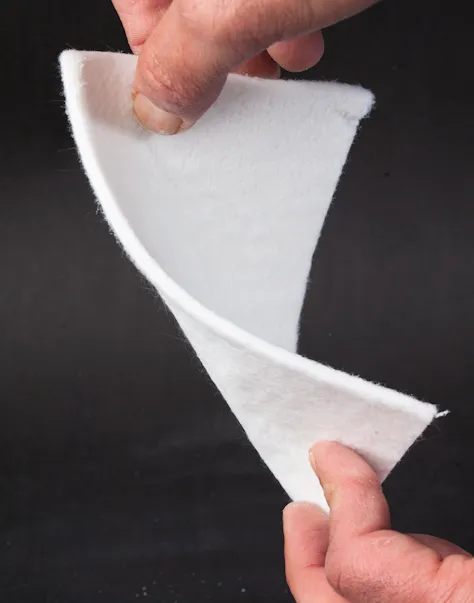
<p>Aerogels are ultra-lightweight, highly porous materials with excellent thermal insulation properties. However, their brittle nature makes direct integration into textiles challenging. So then,&nbsp; how can we convert them to more usable form? Let's dive in.</p>
<p>There are several methods to convert aerogels into a textile-friendly form:</p>
<h3 class="anchor anchorTargetStickyNavbar_Vzrq" id="aerogel-embedded-nonwoven-fabrics">Aerogel-Embedded Nonwoven Fabrics<a href="https://blog.kamlatech.in/aerogel-as-textiles_19#aerogel-embedded-nonwoven-fabrics" class="hash-link" aria-label="Direct link to Aerogel-Embedded Nonwoven Fabrics" title="Direct link to Aerogel-Embedded Nonwoven Fabrics" translate="no">​</a></h3>
<p>Aerogel particles or granules are incorporated into nonwoven fabric structures using needle punching, thermal bonding, or resin bonding. The aerogel powder is mixed with synthetic fibers (such as polyester or polypropylene) and bonded into a flexible sheet.</p>
<div class="theme-admonition theme-admonition-info admonition_xJq3 alert alert--info"><div class="admonitionHeading_Gvgb"><span class="admonitionIcon_Rf37"><svg viewBox="0 0 14 16"><path fill-rule="evenodd" d="M7 2.3c3.14 0 5.7 2.56 5.7 5.7s-2.56 5.7-5.7 5.7A5.71 5.71 0 0 1 1.3 8c0-3.14 2.56-5.7 5.7-5.7zM7 1C3.14 1 0 4.14 0 8s3.14 7 7 7 7-3.14 7-7-3.14-7-7-7zm1 3H6v5h2V4zm0 6H6v2h2v-2z"></path></svg></span>info</div><div class="admonitionContent_BuS1"><p>Aspen Aerogels' Pyrogel and Cryogel are commercial nonwoven aerogel blankets used in thermal insulation.</p></div></div>
<h3 class="anchor anchorTargetStickyNavbar_Vzrq" id="aerogel-coated-fabrics">Aerogel-Coated Fabrics<a href="https://blog.kamlatech.in/aerogel-as-textiles_19#aerogel-coated-fabrics" class="hash-link" aria-label="Direct link to Aerogel-Coated Fabrics" title="Direct link to Aerogel-Coated Fabrics" translate="no">​</a></h3>
<p>Liquid silica aerogel precursor is applied to fabric through dip-coating, spray-coating, or plasma deposition.
The aerogel is polymerized and dried in a controlled manner to maintain flexibility.</p>
<div class="theme-admonition theme-admonition-info admonition_xJq3 alert alert--info"><div class="admonitionHeading_Gvgb"><span class="admonitionIcon_Rf37"><svg viewBox="0 0 14 16"><path fill-rule="evenodd" d="M7 2.3c3.14 0 5.7 2.56 5.7 5.7s-2.56 5.7-5.7 5.7A5.71 5.71 0 0 1 1.3 8c0-3.14 2.56-5.7 5.7-5.7zM7 1C3.14 1 0 4.14 0 8s3.14 7 7 7 7-3.14 7-7-3.14-7-7-7zm1 3H6v5h2V4zm0 6H6v2h2v-2z"></path></svg></span>info</div><div class="admonitionContent_BuS1"><p>NASA developed aerogel-coated textiles for space suits and thermal protective clothing.</p></div></div>
<h3 class="anchor anchorTargetStickyNavbar_Vzrq" id="aerogel-filled-fibers-aerogel-yarns">Aerogel-Filled Fibers (Aerogel Yarns)<a href="https://blog.kamlatech.in/aerogel-as-textiles_19#aerogel-filled-fibers-aerogel-yarns" class="hash-link" aria-label="Direct link to Aerogel-Filled Fibers (Aerogel Yarns)" title="Direct link to Aerogel-Filled Fibers (Aerogel Yarns)" translate="no">​</a></h3>
<p>Hollow fibers (such as polypropylene or polyester) are infused with aerogel particles or aerogel-forming precursors.
The aerogel is then formed inside the fibers via sol-gel processing followed by supercritical drying.</p>
<div class="theme-admonition theme-admonition-info admonition_xJq3 alert alert--info"><div class="admonitionHeading_Gvgb"><span class="admonitionIcon_Rf37"><svg viewBox="0 0 14 16"><path fill-rule="evenodd" d="M7 2.3c3.14 0 5.7 2.56 5.7 5.7s-2.56 5.7-5.7 5.7A5.71 5.71 0 0 1 1.3 8c0-3.14 2.56-5.7 5.7-5.7zM7 1C3.14 1 0 4.14 0 8s3.14 7 7 7 7-3.14 7-7-3.14-7-7-7zm1 3H6v5h2V4zm0 6H6v2h2v-2z"></path></svg></span>info</div><div class="admonitionContent_BuS1"><p>Carbon or silica aerogel-filled fibers are used in lightweight, high-insulation fabrics.</p></div></div>
<h3 class="anchor anchorTargetStickyNavbar_Vzrq" id="aerogel-polymer-composites-flexible-sheets">Aerogel-Polymer Composites (Flexible Sheets)<a href="https://blog.kamlatech.in/aerogel-as-textiles_19#aerogel-polymer-composites-flexible-sheets" class="hash-link" aria-label="Direct link to Aerogel-Polymer Composites (Flexible Sheets)" title="Direct link to Aerogel-Polymer Composites (Flexible Sheets)" translate="no">​</a></h3>
<p>Aerogels are mixed with polymers (such as silicone, polyurethane, or rubber) to improve flexibility.
This composite can be molded into thin sheets or laminated onto textiles.</p>
<div class="theme-admonition theme-admonition-info admonition_xJq3 alert alert--info"><div class="admonitionHeading_Gvgb"><span class="admonitionIcon_Rf37"><svg viewBox="0 0 14 16"><path fill-rule="evenodd" d="M7 2.3c3.14 0 5.7 2.56 5.7 5.7s-2.56 5.7-5.7 5.7A5.71 5.71 0 0 1 1.3 8c0-3.14 2.56-5.7 5.7-5.7zM7 1C3.14 1 0 4.14 0 8s3.14 7 7 7 7-3.14 7-7-3.14-7-7-7zm1 3H6v5h2V4zm0 6H6v2h2v-2z"></path></svg></span>info</div><div class="admonitionContent_BuS1"><p>BASF’s SLENTEX® is a flexible aerogel blanket used for clothing insulation.</p></div></div>
<h3 class="anchor anchorTargetStickyNavbar_Vzrq" id="electrospun-aerogel-nanofibers">Electrospun Aerogel Nanofibers<a href="https://blog.kamlatech.in/aerogel-as-textiles_19#electrospun-aerogel-nanofibers" class="hash-link" aria-label="Direct link to Electrospun Aerogel Nanofibers" title="Direct link to Electrospun Aerogel Nanofibers" translate="no">​</a></h3>
<p>Aerogel solutions are electrospun into ultrafine nanofibers.
These fibers form an aerogel membrane that can be laminated onto textile layers.</p>
<div class="theme-admonition theme-admonition-info admonition_xJq3 alert alert--info"><div class="admonitionHeading_Gvgb"><span class="admonitionIcon_Rf37"><svg viewBox="0 0 14 16"><path fill-rule="evenodd" d="M7 2.3c3.14 0 5.7 2.56 5.7 5.7s-2.56 5.7-5.7 5.7A5.71 5.71 0 0 1 1.3 8c0-3.14 2.56-5.7 5.7-5.7zM7 1C3.14 1 0 4.14 0 8s3.14 7 7 7 7-3.14 7-7-3.14-7-7-7zm1 3H6v5h2V4zm0 6H6v2h2v-2z"></path></svg></span>info</div><div class="admonitionContent_BuS1"><p>Electrospun aerogel fibers are used in heat-resistant and breathable fabrics.</p></div></div>
<h4 class="anchor anchorTargetStickyNavbar_Vzrq" id="innovate-with-kamlatech">Innovate with <a href="https://kamlatech.in/services/" target="_blank" rel="noopener noreferrer" class="">Kamlatech</a><a href="https://blog.kamlatech.in/aerogel-as-textiles_19#innovate-with-kamlatech" class="hash-link" aria-label="Direct link to innovate-with-kamlatech" title="Direct link to innovate-with-kamlatech" translate="no">​</a></h4>]]></content>
        <author>
            <name>Prashant Verma</name>
            <uri>https://www.linkedin.com/in/prashant3285/</uri>
        </author>
        <category label="Technical Textile" term="Technical Textile"/>
    </entry>
    <entry>
        <title type="html"><![CDATA[Aerogels- The Lightweight Wonders of Modern Materials Science]]></title>
        <id>https://blog.kamlatech.in/aerogels-lightweight-wonders-of-modern</id>
        <link href="https://blog.kamlatech.in/aerogels-lightweight-wonders-of-modern"/>
        <updated>2024-11-13T00:00:00.000Z</updated>
        <summary type="html"><![CDATA[Aerogels are fascinating materials, often referred to as "frozen smoke"]]></summary>
        <content type="html"><![CDATA[<p>&nbsp;</p>
<p><img decoding="async" loading="lazy" src="https://blog.kamlatech.in/assets/images/aerogel_hig_temp-1c8ae8430d33d1081f28bc3ce6da9215.jpg" width="1440" height="480" class="img_ev3q"></p>
<p>Aerogels are fascinating materials, often referred to as "frozen smoke"
because of their light, airy, and translucent appearance. Essentially, an
aerogel is a substance that's primarily made up of air, with a very small
amount of solid material—typically silica, but also other materials like
carbon or polymer-based substances. The process to create an aerogel begins by
turning a gel (a substance with a solid network holding a liquid) into a
solid, but crucially, it replaces the liquid with air in a process known as
supercritical drying. This process allows the material to retain its porous
structure, which is why aerogels are so light—up to 99.8% of an aerogel's
volume can be air.</p>
<p>Despite their lightweight nature, aerogels have remarkable properties.
For instance, they are extremely good at insulating. Aerogels are so efficient
at trapping air in their microscopic pores that they can provide thermal
insulation far superior to traditional materials. This makes them useful in
extreme environments, like space suits, where protecting against temperature
extremes is critical. In fact, NASA uses aerogels in various spacecraft
applications, including insulation for delicate instruments and collecting
cosmic dust. Another interesting feature is their strength-to-weight ratio.
While aerogels are fragile in terms of direct impact or compression, they can
support a lot of weight when distributed across their surface area, making
them useful for specific engineering and scientific applications.</p>
<p><img decoding="async" loading="lazy" src="https://blog.kamlatech.in/assets/images/52005937434_38be9fc06d_k-26ac12ca83480bd077dee59908b5ae21.jpg" width="2048" height="1536" class="img_ev3q"></p>
<p>The properties of aerogels are a direct result of their structure. The
solid network of particles within an aerogel is highly porous and extends across
the entire material, forming a kind of three-dimensional lattice. These pores
are incredibly small, often just a few nanometers in size, and they trap air in
such a way that heat and sound have a hard time passing through. This makes
aerogels both excellent thermal insulators and sound dampeners. They are also
very transparent, which is another interesting feature that sets them apart from
other materials. Their ability to be made from different materials—like silica,
carbon, or even metal oxides—means that aerogels can have a range of different
properties depending on their intended application.</p>
<p><img decoding="async" loading="lazy" src="https://blog.kamlatech.in/assets/images/43_can_aerogel_insulation_cut_down_our_energy_bills_youtube_0_1_53-86b7b03cbcc17819f2ab450711e22b48.jpeg" width="400" height="359" class="img_ev3q"></p>
<p>While aerogels are not typically used in everyday products due to their fragility and the
complexity of their manufacturing process, they have niche uses in high-tech
industries. For example, they're used in scientific instruments, as insulation
in cryogenic systems, and as components in advanced filtration systems. More
recently, research has been focused on improving the strength and durability of
aerogels so they can become more practical for wider use, such as in building
insulation or as lightweight materials for electric vehicles. The lightness,
insulating properties, and potential for customization in various forms make
aerogels an exciting area of materials science, pushing the boundaries of what
we thought was possible with traditional materials.</p>
<p>Innovate with <a href="https://kamlatech.in/" target="_blank" rel="noopener noreferrer" class="">Kamlatech</a></p>]]></content>
        <author>
            <name>Prashant Verma</name>
            <uri>https://www.linkedin.com/in/prashant3285/</uri>
        </author>
        <category label="Polymer" term="Polymer"/>
    </entry>
    <entry>
        <title type="html"><![CDATA[Electro-osmosis In Textile]]></title>
        <id>https://blog.kamlatech.in/electro-osmosis-in-textile</id>
        <link href="https://blog.kamlatech.in/electro-osmosis-in-textile"/>
        <updated>2024-10-30T00:00:00.000Z</updated>
        <summary type="html"><![CDATA[Electro\-osmosis in textile membranes is a fascinating process where an electric field drives the movement of fluids through a textile material. But what exactly are textile membranes? These are porous materials made up of fibers or a matrix that allows fluids to pass through, and they’re widely used in applications like filtration and separation processes due to their ability to selectively move liquids.]]></summary>
        <content type="html"><![CDATA[<p><img decoding="async" loading="lazy" src="https://blog.kamlatech.in/assets/images/water_7565462_1920-58490ab95a089b7c32b7681390ffd4d3.jpg" width="639" height="426" class="img_ev3q"></p>
<p>Electro-osmosis in textile membranes is a fascinating process where an electric field drives the movement of fluids through a textile material. But what exactly are textile membranes? These are porous materials made up of fibers or a matrix that allows fluids to pass through, and they’re widely used in applications like filtration and separation processes due to their ability to selectively move liquids.</p>
<p>Now, when we talk about how electro-osmosis works, we must consider the principle behind it: when an electric field is applied across a textile membrane—especially one with charged surfaces or in contact with an electrolyte solution—electro-osmotic flow can occur. This flow results from the interaction between the electric field and the electric double layer (EDL) that forms at the membrane's surface.</p>
<p>So, what is this electric double layer? It forms when the membrane is in contact with an electrolyte solution, causing ions from the solution to accumulate at the surface, creating a double layer of charges. This layer is essential because it interacts with the applied electric field, enabling the electro-osmotic flow. As the electric field exerts a force on the ions in the EDL, they begin to move, and this movement drags along the surrounding fluid molecules—like water or other solvents—resulting in fluid flowing through the membrane.
Finally, you might wonder about the applications of this process. Electro-osmosis in textile membranes can enhance filtration efficiency, facilitate desalination processes, and control liquid flow in microfluidic devices. It's particularly valuable in fields that require precise control over fluid movement, making it a versatile and essential technology in various applications.</p>
<p>Innovate with <a href="https://kamlatech.in/" target="_blank" rel="noopener noreferrer" class="">Kamlatech</a></p>]]></content>
        <author>
            <name>Prashant Verma</name>
            <uri>https://www.linkedin.com/in/prashant3285/</uri>
        </author>
        <category label="Technical Textile" term="Technical Textile"/>
        <category label="Technology" term="Technology"/>
    </entry>
    <entry>
        <title type="html"><![CDATA[Variation in Arc Flash Test Results]]></title>
        <id>https://blog.kamlatech.in/variation-in-arc-flash-test-results</id>
        <link href="https://blog.kamlatech.in/variation-in-arc-flash-test-results"/>
        <updated>2024-10-08T00:00:00.000Z</updated>
        <summary type="html"><![CDATA[Introduction]]></summary>
        <content type="html"><![CDATA[<p><img decoding="async" loading="lazy" src="https://blog.kamlatech.in/assets/images/arc_in_box-d4fd3a8a3ad31bfd53b0c11cb7464602.webp" width="640" height="496" class="img_ev3q"></p>
<h2 class="anchor anchorTargetStickyNavbar_Vzrq" id="introduction">Introduction<a href="https://blog.kamlatech.in/variation-in-arc-flash-test-results#introduction" class="hash-link" aria-label="Direct link to Introduction" title="Direct link to Introduction" translate="no">​</a></h2>
<p>Understanding the effects of test setups and material testing parameters on arc flash results is vital for ensuring the safety of workers exposed to electrical hazards. The variability in heat transfer processes during arc flash events can significantly influence the arc ratings of personal protective equipment (PPE). This blog explores how different testing conditions impact arc flash results and discusses their implications for end users in various industrial settings.</p>
<h3 class="anchor anchorTargetStickyNavbar_Vzrq" id="the-heat-transfer-process-in-arc-flash-events">The Heat Transfer Process in Arc Flash Events<a href="https://blog.kamlatech.in/variation-in-arc-flash-test-results#the-heat-transfer-process-in-arc-flash-events" class="hash-link" aria-label="Direct link to The Heat Transfer Process in Arc Flash Events" title="Direct link to The Heat Transfer Process in Arc Flash Events" translate="no">​</a></h3>
<p>Arc flash incidents involve complex heat transfer mechanisms that include:</p>
<ul>
<li class=""><strong>Radiant Heat Energy:</strong> Energy emitted as light and heat from the arc.</li>
<li class=""><strong>Convective Heat Energy:</strong> Heat transferred through the movement of air.</li>
<li class=""><strong>Plasma Exposure:</strong> Direct exposure to superheated ionized gas.</li>
<li class=""><strong>Phase Transition of Metals:</strong> Changes in the state of metal conductors during an arc event.</li>
</ul>
<p>These factors contribute to the varying performance of PPE based on the testing conditions and materials used.</p>
<h2 class="anchor anchorTargetStickyNavbar_Vzrq" id="test-setups">Test Setups<a href="https://blog.kamlatech.in/variation-in-arc-flash-test-results#test-setups" class="hash-link" aria-label="Direct link to Test Setups" title="Direct link to Test Setups" translate="no">​</a></h2>
<h3 class="anchor anchorTargetStickyNavbar_Vzrq" id="astm-testing-standards">ASTM Testing Standards<a href="https://blog.kamlatech.in/variation-in-arc-flash-test-results#astm-testing-standards" class="hash-link" aria-label="Direct link to ASTM Testing Standards" title="Direct link to ASTM Testing Standards" translate="no">​</a></h3>
<p>The ASTM F1959 and F2178 standards involve a controlled testing environment using stainless steel electrodes with a gap of 12 inches. This setup, typically conducted at 3kV and 8kA, primarily assesses radiant heat exposure. While it provides a baseline for evaluating PPE, it does not reflect the conditions faced by industrial electricians.</p>
<h3 class="anchor anchorTargetStickyNavbar_Vzrq" id="ieee-arc-in-a-box-configuration">IEEE Arc-in-a-Box Configuration<a href="https://blog.kamlatech.in/variation-in-arc-flash-test-results#ieee-arc-in-a-box-configuration" class="hash-link" aria-label="Direct link to IEEE Arc-in-a-Box Configuration" title="Direct link to IEEE Arc-in-a-Box Configuration" translate="no">​</a></h3>
<p>In contrast, the IEEE arc-in-a-box test configuration simulates more realistic industrial scenarios. Using copper conductors in a cubic setup, this test operates at lower voltages (600V to 480V) and higher fault currents (20kA to 50kA). The proximity of the conductors and the potential for more intense thermal exposure yield results that differ markedly from ASTM testing.</p>
<h2 class="anchor anchorTargetStickyNavbar_Vzrq" id="effects-on-arc-flash-ratings">Effects on Arc Flash Ratings<a href="https://blog.kamlatech.in/variation-in-arc-flash-test-results#effects-on-arc-flash-ratings" class="hash-link" aria-label="Direct link to Effects on Arc Flash Ratings" title="Direct link to Effects on Arc Flash Ratings" translate="no">​</a></h2>
<h3 class="anchor anchorTargetStickyNavbar_Vzrq" id="changes-in-arc-ratings">Changes in Arc Ratings<a href="https://blog.kamlatech.in/variation-in-arc-flash-test-results#changes-in-arc-ratings" class="hash-link" aria-label="Direct link to Changes in Arc Ratings" title="Direct link to Changes in Arc Ratings" translate="no">​</a></h3>
<p>Research indicates that the arc ratings of PPE materials can drop significantly under the arc-in-a-box test conditions. For instance:</p>
<ul>
<li class=""><strong>Hazard Risk Category 2 (HRC2):</strong> Arc ratings can decrease by 15% to 40%.</li>
<li class=""><strong>Hazard Risk Category 4 (HRC4):</strong> Arc ratings can decrease by 45% to 70%.</li>
</ul>
<p>Conversely, face shields show an increase in effective arc ratings under similar conditions, illustrating the distinct protective features of transparent materials.</p>
<h3 class="anchor anchorTargetStickyNavbar_Vzrq" id="impact-of-material-permeability">Impact of Material Permeability<a href="https://blog.kamlatech.in/variation-in-arc-flash-test-results#impact-of-material-permeability" class="hash-link" aria-label="Direct link to Impact of Material Permeability" title="Direct link to Impact of Material Permeability" translate="no">​</a></h3>
<p>Material permeability plays a crucial role in the performance of PPE during arc flash testing. Fabrics with low air permeability tend to maintain their arc ratings better in arc-in-a-box conditions due to reduced convective heat transfer. In contrast, highly permeable materials may experience greater heat transfer and a subsequent decline in performance.</p>
<h2 class="anchor anchorTargetStickyNavbar_Vzrq" id="implications-for-end-user-applications">Implications for End User Applications<a href="https://blog.kamlatech.in/variation-in-arc-flash-test-results#implications-for-end-user-applications" class="hash-link" aria-label="Direct link to Implications for End User Applications" title="Direct link to Implications for End User Applications" translate="no">​</a></h2>
<h3 class="anchor anchorTargetStickyNavbar_Vzrq" id="need-for-comprehensive-testing">Need for Comprehensive Testing<a href="https://blog.kamlatech.in/variation-in-arc-flash-test-results#need-for-comprehensive-testing" class="hash-link" aria-label="Direct link to Need for Comprehensive Testing" title="Direct link to Need for Comprehensive Testing" translate="no">​</a></h3>
<p>Given the discrepancies between standard test results and real-world applications, it is essential for end users—such as electrical contractors and industrial safety managers—to consider both ASTM and IEEE testing results when selecting PPE. Relying solely on ASTM ratings may lead to underestimating the risks associated with specific industrial conditions.</p>
<h3 class="anchor anchorTargetStickyNavbar_Vzrq" id="design-features-for-enhanced-protection">Design Features for Enhanced Protection<a href="https://blog.kamlatech.in/variation-in-arc-flash-test-results#design-features-for-enhanced-protection" class="hash-link" aria-label="Direct link to Design Features for Enhanced Protection" title="Direct link to Design Features for Enhanced Protection" translate="no">​</a></h3>
<p>Many arc flash suits incorporate overlapping layers in critical areas to enhance protection. For instance, designs that include hood flaps and bib overalls create additional layers of material, effectively increasing the arc rating in these regions. This design consideration is crucial for ensuring maximum protection against arc flash incidents.</p>
<h3 class="anchor anchorTargetStickyNavbar_Vzrq" id="ongoing-training-and-awareness">Ongoing Training and Awareness<a href="https://blog.kamlatech.in/variation-in-arc-flash-test-results#ongoing-training-and-awareness" class="hash-link" aria-label="Direct link to Ongoing Training and Awareness" title="Direct link to Ongoing Training and Awareness" translate="no">​</a></h3>
<p>To effectively mitigate risks, organizations must prioritize ongoing training and awareness regarding the selection and use of PPE. Understanding the implications of different testing setups and material properties will empower workers to make informed decisions about their protective gear.
Innovate with <a href="https://kamlatech.in/" target="_blank" rel="noopener noreferrer" class="">Kamlatech</a></p>]]></content>
        <author>
            <name>Prashant Verma</name>
            <uri>https://www.linkedin.com/in/prashant3285/</uri>
        </author>
        <category label="Technical Textile" term="Technical Textile"/>
    </entry>
    <entry>
        <title type="html"><![CDATA[Block Annoying Google Sign-in Prompt on Chrome and Android]]></title>
        <id>https://blog.kamlatech.in/block-annoying-google-sign-in-prompt-on</id>
        <link href="https://blog.kamlatech.in/block-annoying-google-sign-in-prompt-on"/>
        <updated>2024-07-26T00:00:00.000Z</updated>
        <summary type="html"><![CDATA[Are you annoyed with the continuous pop from websites, asking to sign in with]]></summary>
        <content type="html"><![CDATA[<p><img decoding="async" loading="lazy" src="https://blog.kamlatech.in/assets/images/annoying_prompt-dc82e61109cc1dd1b8ef3f15545d3887.png" width="640" height="360" class="img_ev3q"></p>
<p>Are you annoyed with the continuous pop from websites, asking to sign in with
your Google account. It becomes a menace to browse on Chrome and switch tabs
when the automatic sign-in overlay pops up.</p>
<p>The good news is that it can be disabled, but it's not an easy to find setting.
Let's look at how to disable these pop-ups</p>
<h2 class="anchor anchorTargetStickyNavbar_Vzrq" id="android">Android<a href="https://blog.kamlatech.in/block-annoying-google-sign-in-prompt-on#android" class="hash-link" aria-label="Direct link to Android" title="Direct link to Android" translate="no">​</a></h2>
<ul>
<li class="">Login into your Google account setting -&nbsp;<a href="https://myaccount.google.com/security" target="_blank" rel="noopener noreferrer" class="">Google Account</a></li>
<li class="">Search for "Sign-in prompts" in the search box</li>
</ul>
<p><img decoding="async" loading="lazy" src="https://blog.kamlatech.in/assets/images/google_account_setting-36b2d41fc339eba89ac48654ea8977af.webp" width="640" height="178" class="img_ev3q"></p>
<ul>
<li class="">Disable (toggle) the setting "Allow Google to display a sign-in prompt on Android"</li>
</ul>
<p><img decoding="async" loading="lazy" src="https://blog.kamlatech.in/assets/images/android_disable_signin-b1d92bfb8e6cdbd407989083624f6261.webp" width="640" height="194" class="img_ev3q"></p>
<h2 class="anchor anchorTargetStickyNavbar_Vzrq" id="chrome">Chrome<a href="https://blog.kamlatech.in/block-annoying-google-sign-in-prompt-on#chrome" class="hash-link" aria-label="Direct link to Chrome" title="Direct link to Chrome" translate="no">​</a></h2>
<p>In Chrome, this setting is hidden nicely and difficult to find.</p>
<ul>
<li class="">Go to Google Chrome settings</li>
<li class="">Search for "identity services" in the search box</li>
</ul>
<p><img decoding="async" loading="lazy" src="https://blog.kamlatech.in/assets/images/chrome_site_setting-12b20e650ea4f869d6d47169d4ad4190.webp" width="640" height="466" class="img_ev3q"></p>
<ul>
<li class="">Click on "Site Setting" at the bottom of the list</li>
<li class="">Next scroll down to the heading "Content"</li>
</ul>
<p><img decoding="async" loading="lazy" src="https://blog.kamlatech.in/assets/images/chrome_content_setting-d68e30cbb1a7a685dde1765f74a0910d.webp" width="640" height="330" class="img_ev3q"></p>
<ul>
<li class="">Under that heading you will see the last option as "Additional Content Setting"</li>
<li class="">Expand the "Additional Content Setting" using the downwards arrow</li>
<li class="">Scroll down to "Third-party sign-in" setting and click it</li>
<li class="">In the next screen, select "Block sign-in prompts from identity services"</li>
</ul>
<p><img decoding="async" loading="lazy" src="https://blog.kamlatech.in/assets/images/chrome_signin_prompt-f66d9e3e49bd065f8b27bf5ece2d223b.png" width="640" height="268" class="img_ev3q"></p>
<p>Innovate with <a href="https://kamlatech.in/" target="_blank" rel="noopener noreferrer" class="">Kamlatech</a></p>]]></content>
        <author>
            <name>Prashant Verma</name>
            <uri>https://www.linkedin.com/in/prashant3285/</uri>
        </author>
        <category label="Hacks" term="Hacks"/>
    </entry>
    <entry>
        <title type="html"><![CDATA[Navigating the Regulatory Landscape- Medical Device in India]]></title>
        <id>https://blog.kamlatech.in/navigating-regulatory-landscape-medical</id>
        <link href="https://blog.kamlatech.in/navigating-regulatory-landscape-medical"/>
        <updated>2024-06-30T00:00:00.000Z</updated>
        <summary type="html"><![CDATA[In India, the term "medical device" \(MD\) refers to instruments, apparatus, appliances, implants, materials, or other articles used for:]]></summary>
        <content type="html"><![CDATA[<p><img decoding="async" loading="lazy" src="https://blog.kamlatech.in/assets/images/medical_device-873d44471d339fca1f54a29ecba0d3dc.jpg" width="639" height="426" class="img_ev3q"></p>
<p>In India, the term "medical device" (MD) refers to instruments, apparatus, appliances, implants, materials, or other articles used for:</p>
<ul>
<li class="">Diagnosis, prevention, and treatment of diseases or disorders</li>
<li class="">Monitoring physiological conditions</li>
<li class="">Supporting or assisting in medical therapy</li>
</ul>
<p>These devices can be used internally or externally on humans.
Medical devices are regulated under the Drugs and Cosmetics Act, 1940 and its corresponding rules. The Central Drugs Standard Control Organization (<a href="https://www.cdscomdonline.gov.in/NewMedDev/Homepage" target="_blank" rel="noopener noreferrer" class="">CDSCO</a>) is responsible for approving new medical devices. Only certain categories of medical devices, called "notified devices", require approval from CDSCO.
Lets go throught the steps involved on meeting regulatory compliance for medical devices in India</p>
<h3 class="anchor anchorTargetStickyNavbar_Vzrq" id="scope-of-medical-device">Scope of Medical Device<a href="https://blog.kamlatech.in/navigating-regulatory-landscape-medical#scope-of-medical-device" class="hash-link" aria-label="Direct link to Scope of Medical Device" title="Direct link to Scope of Medical Device" translate="no">​</a></h3>
<p>The first step is to establish the scope of the medical device, or simply put, the purpose of the device. Does it diagnose, prevent, treat, monitor, support, or assist in medical therapy? Be specific about the intended use of your device. Is it a diagnostic tool, an implant, a monitoring device, or something else? Knowing the function helps categorize your device and determine the regulations that apply. Scope will determine the risk level involved with the device.&nbsp;
India classifies medical devices into four categories (A-D) based on their potential risk to patients.</p>
<ul>
<li class=""><strong>Class A (Low Risk)</strong> - Requires minimal regulation and/or registration process (sterile / measuring)</li>
<li class=""><strong>Class B (Moderate Risk)</strong> - Requires a registration process.</li>
<li class=""><strong>Class C (High Risk)</strong> - Requires a more stringent approval process.</li>
<li class=""><strong>Class D (Highest Risk)</strong> - Requires the most rigorous approval process.</li>
</ul>
<p>The intended use / scope of the device can be adjusted to get quick approvals and early market entry. For example, if the scope is limited to measurement instead of diagnosis, the less stringent regulatory requirements will be applicable and the product can be placed in the market with the limited functionality and scope. This can be useful for early feedback or prevent long entry to market time for a sophisticated. The features / scope of the device can be further increased, and necessary regulatory approvals can be done subsequently.&nbsp;</p>
<h3 class="anchor anchorTargetStickyNavbar_Vzrq" id="product-md-design-finalization">Product (MD) Design Finalization<a href="https://blog.kamlatech.in/navigating-regulatory-landscape-medical#product-md-design-finalization" class="hash-link" aria-label="Direct link to Product (MD) Design Finalization" title="Direct link to Product (MD) Design Finalization" translate="no">​</a></h3>
<p>This phase starts by establishing the product requirements.&nbsp;During this phase, we discuss what the device will be used for and what materials it needs. For example, how long it should last, what materials it should be made of, and what surfaces it should stick to. To figure out the materials needed, we look at different options for adhesives and backing materials. In certain cases, a confidential agreement or a quality agreement are done with the vendors to make sure everyone understands what needs to be done and to protect everyone involved.</p>
<h3 class="anchor anchorTargetStickyNavbar_Vzrq" id="prototyping">Prototyping<a href="https://blog.kamlatech.in/navigating-regulatory-landscape-medical#prototyping" class="hash-link" aria-label="Direct link to Prototyping" title="Direct link to Prototyping" translate="no">​</a></h3>
<p>Medical device prototyping is an early development stage where a model or sample is created to demonstrate the basic appearance, operation, and outcomes of a product. The process typically involves several stages:</p>
<ul>
<li class=""><strong>Product Concept:</strong> Initial ideas and concepts are explored. Physical mockups or concept models are used to pitch the idea to stakeholders.</li>
<li class=""><strong>Proof of Concept (PoC):</strong> A functional prototype is created using basic materials to test the design's usability and feasibility of the idea.</li>
<li class=""><strong>Alpha Prototype:</strong> This is a non-functioning sample used to test dimensions, tactile feel, and appearance. Alpha prototypes are often produced using 3D printing technology.</li>
<li class=""><strong>Beta Prototype:</strong> Iterative improvements are made based on feedback. This prototype is closer to the final product and undergoes more rigorous testing.</li>
</ul>
<p>Not every component is suitable for all applications, and it's crucial to consider that certain combinations may be incompatible. It's essential to conduct thorough testing on various combinations of materials to identify the optimal choice for your device.
Suitable bench tests like EMC (Electromagnetic compatibility), EMI (electromagnetic interference), drop, cycling, wash, may be performed, to evaluate the suitability of selected design and component. In case any testing needs to be done on a human subject for exploration / validation, then a prior approval is required for ethics committee.
Documentation is the most essential aspect during the development and regulatory lifecycle of the product. The scope of the product is something which will definitely be defined in a documentary form, but it is equally important to document the product design phases. This can be done in any format as suitable and traceable, but eventually these documentations will translate into a Design History File (DHF).
A Design History File (DHF) is like a scrapbook that tracks the development journey of a medical device. It's a collection of documents showing exactly how the device went from idea to finished product. The content of DHF includes:</p>
<ul>
<li class=""><strong>Initial ideas and plans:</strong> This includes things like what problem the device solves and its intended use.</li>
<li class=""><strong>Design decisions:</strong> Documents explaining why certain materials, features, or functions were chosen.</li>
<li class=""><strong>Testing results:</strong> Proof that the device meets safety and performance standards.</li>
<li class=""><strong>Changes made along the way:</strong> Records of any modifications made during development.</li>
</ul>
<p>Basically, the DHF shows a clear trail of how the design evolved, ensuring it meets requirements for patient safety.</p>
<h3 class="anchor anchorTargetStickyNavbar_Vzrq" id="test-licensing">Test Licensing<a href="https://blog.kamlatech.in/navigating-regulatory-landscape-medical#test-licensing" class="hash-link" aria-label="Direct link to Test Licensing" title="Direct link to Test Licensing" translate="no">​</a></h3>
<p>A new medical device may need to be rested before full-scale commercialization. A test license is required for performing below activity:</p>
<ul>
<li class=""><strong>Clinical Investigations:</strong> Testing the device on human subjects to see if it's safe and effective.</li>
<li class=""><strong>Evaluation and Demonstration:</strong> Assessing the device's performance and showcasing it to potential users.</li>
<li class=""><strong>Training:</strong> Providing healthcare professionals with hands-on experience with the device.</li>
</ul>
<p>This is crucial to prevent unauthorized import or manufacturing of medical devices in India without proper licensing, ensuring controlled testing before a full market launch, and verifying that the device meets safety and performance standards before it reaches patients.
Important information needed to apply for test license include:&nbsp;</p>
<ul>
<li class=""><strong>Device Information:</strong> Details like the device name, model, intended use, and classification (Class A, B, C, or D).</li>
<li class=""><strong>Technical Specifications:</strong> Documents explaining the device's design, materials, and functionalities.</li>
<li class=""><strong>Testing Plan:</strong> A clear outline of how you'll be testing the device, including the purpose, methodology, and expected outcomes.</li>
<li class=""><strong>Import/Manufacturing Details:</strong>&nbsp;Information about the manufacturer/supplier and the quantity of devices needed. Manufacturing plant layout, people involved, equipments used etc.</li>
</ul>
<p>Further, you'll may be required to manufacture at least three batches of the device for testing purposes. This allows for quality control checks, including how the device performs over time and whether your manufacturing process consistently produces high-quality devices.
If the device developed is to be used on human subject for the purpose of Clinical investigation, then the facility should be Quality Management System compliant.</p>
<div class="theme-admonition theme-admonition-info admonition_xJq3 alert alert--info"><div class="admonitionHeading_Gvgb"><span class="admonitionIcon_Rf37"><svg viewBox="0 0 14 16"><path fill-rule="evenodd" d="M7 2.3c3.14 0 5.7 2.56 5.7 5.7s-2.56 5.7-5.7 5.7A5.71 5.71 0 0 1 1.3 8c0-3.14 2.56-5.7 5.7-5.7zM7 1C3.14 1 0 4.14 0 8s3.14 7 7 7 7-3.14 7-7-3.14-7-7-7zm1 3H6v5h2V4zm0 6H6v2h2v-2z"></path></svg></span>info</div><div class="admonitionContent_BuS1"><p>In India, an investigational medical device is a device that doesn't have a similar or predicate device already available in the country. These devices are subject to clinical investigations on human participants in India to demonstrate their safety, performance, and effectiveness.</p></div></div>
<h3 class="anchor anchorTargetStickyNavbar_Vzrq" id="clinical-investigation-ci">Clinical Investigation (CI)<a href="https://blog.kamlatech.in/navigating-regulatory-landscape-medical#clinical-investigation-ci" class="hash-link" aria-label="Direct link to Clinical Investigation (CI)" title="Direct link to Clinical Investigation (CI)" translate="no">​</a></h3>
<p>In India, before a new medical device can be marketed and used on patients, it needs to go through a series of tests and evaluations. This process, called a Clinical Investigation (CI), helps ensure the device is safe and effective for its intended purpose. The Central Drugs Standard Control Organization (CDSCO) regulates CIs for medical devices.
A CI is generally mandatory for most investigational medical devices (except for some Class A devices) before they can be used in human trials. This includes devices still under development, prototypes, or those planned for significant modifications.
Important information needed to get approval from CDSCO for conducting an CI include:</p>
<ul>
<li class=""><strong>Device Information:</strong> Details like device name, model, intended use, classification, and risk profile.</li>
<li class=""><strong>Clinical Investigation Plan (CIP):</strong> A comprehensive document outlining the study design, objectives, methodology, participant selection criteria, risk management plan, and data collection procedures for Pilot* / Pivotal* studies.</li>
<li class=""><strong>Investigational Brochure (IB):</strong> Information for investigators and participants about the device, its intended use, potential risks and benefits, and study procedures.</li>
<li class=""><strong>Investigator Qualifications:</strong> Documentation demonstrating the experience and expertise of the investigators who will conduct the study.</li>
<li class=""><strong>Ethics Committee Approval:</strong> Evidence of ethical approval for the study from an authorized Ethics Committee.</li>
</ul>
<div class="theme-admonition theme-admonition-info admonition_xJq3 alert alert--info"><div class="admonitionHeading_Gvgb"><span class="admonitionIcon_Rf37"><svg viewBox="0 0 14 16"><path fill-rule="evenodd" d="M7 2.3c3.14 0 5.7 2.56 5.7 5.7s-2.56 5.7-5.7 5.7A5.71 5.71 0 0 1 1.3 8c0-3.14 2.56-5.7 5.7-5.7zM7 1C3.14 1 0 4.14 0 8s3.14 7 7 7 7-3.14 7-7-3.14-7-7-7zm1 3H6v5h2V4zm0 6H6v2h2v-2z"></path></svg></span>info</div><div class="admonitionContent_BuS1"><p><strong>Pilot and Pivotal studies</strong> are both used in medical device development, but with different goals.  A pilot study is a smaller, exploratory trial that tests the feasibility of a larger study and gathers preliminary data.  Think of it as a test run.  In contrast, a pivotal study is the main event, a larger and more rigorous trial designed to definitively prove the safety and effectiveness of the device for regulatory approval.  It's like the final exam after all the preparation.</p></div></div>
<p>Once the CI is completed, you'll need to thoroughly analyze the collected data. This involves assessing the device's safety, efficacy, and any potential risks and benefits. Based on the analysis, a comprehensive CI report needs to be prepared. This report will detail the study design, methodology, results, conclusions, and any adverse events encountered during the investigation. The final CI report, along with any relevant updates or amendments, needs to be submitted to the CDSCO for review and evaluation.
It is important to note that test data for the bench test performe for the device also needs to be compiled along with the CI data.</p>
<h3 class="anchor anchorTargetStickyNavbar_Vzrq" id="manufacturing-license">Manufacturing License<a href="https://blog.kamlatech.in/navigating-regulatory-landscape-medical#manufacturing-license" class="hash-link" aria-label="Direct link to Manufacturing License" title="Direct link to Manufacturing License" translate="no">​</a></h3>
<p>As already metioned you need a import / manufactruing license from CDSCO to import or manufacture a medical device in India.&nbsp;Assuming positive CI results, you can then proceed with applying for a manufacturing license. This process involves ensuring your manufacturing facility meets all CDSCO's Good Manufacturing Practices (GMP) guidelines. Important apects include ISO 13485 certification, SOP's, Work Instruction, People training, Quality control etc.
In case the medical device consist of two or more conponents, then the final assembly factory with an ISO 13485 certification is required.
An application needs to be submitted through the CDSCO online portal, including details about your manufacturing facility, quality control procedures, and the device specifications. The CDSCO might conduct an inspection of your manufacturing facility to verify compliance with GMP regulations. If everything is satisfactory, the CDSCO will grant you a manufacturing license for your medical device.</p>
<h3 class="anchor anchorTargetStickyNavbar_Vzrq" id="predicate-device-route">Predicate Device Route<a href="https://blog.kamlatech.in/navigating-regulatory-landscape-medical#predicate-device-route" class="hash-link" aria-label="Direct link to Predicate Device Route" title="Direct link to Predicate Device Route" translate="no">​</a></h3>
<p>The predicate device route is a strategy you can explore to potentially avoid a full Clinical Investigation (CI) for your medical device when seeking approval from the CDSCO in India. Here's how it works:
The idea is to identify an existing medical device, called the "predicate device", that is already approved for marketing in India and is similar to your device in terms of:</p>
<ul>
<li class=""><strong>Intended Use:</strong> Both devices should address the same medical condition or have the same purpose.</li>
<li class=""><strong>Technological Characteristics:</strong> The design, materials, and functioning principles of your device should be closely comparable to the predicate device.</li>
<li class=""><strong>Risk Profile*:</strong> The potential risks associated with both devices should be similar.</li>
</ul>
<p>Identify a suitable predicate device by researching existing medical devices in the market and consulting regulatory databases. This will involve literatue research, accessing CTRI (Clinical Trials Registry- India) Data, Adverse events, Recalls etc. You'll need to prepare a comprehensive document demonstrating the equivalence of your device to the predicate device. This document should address the similarities in intended use, technological characteristics, and risk profile. It shoud also adress how the adverse effects and recalls of predicate device are not applicable or take care by you device. The CDSCO will review your equivalence demonstration and determine if it justifies waiving the requirement for a full CI.</p>
<div class="theme-admonition theme-admonition-info admonition_xJq3 alert alert--info"><div class="admonitionHeading_Gvgb"><span class="admonitionIcon_Rf37"><svg viewBox="0 0 14 16"><path fill-rule="evenodd" d="M7 2.3c3.14 0 5.7 2.56 5.7 5.7s-2.56 5.7-5.7 5.7A5.71 5.71 0 0 1 1.3 8c0-3.14 2.56-5.7 5.7-5.7zM7 1C3.14 1 0 4.14 0 8s3.14 7 7 7 7-3.14 7-7-3.14-7-7-7zm1 3H6v5h2V4zm0 6H6v2h2v-2z"></path></svg></span>info</div><div class="admonitionContent_BuS1"><p>The <strong>Risk Profile</strong> of a medical device is how likely it is to cause harm.&nbsp; It's important to consider this to ensure patient safety.&nbsp; Complex devices used by patients at home have a higher risk profile than simple devices used by professionals. So for example Pacemakers, despite their benefits, have some risks. These include infection from the implant site, malfunctioning of the device itself, interference from external factors like magnets, and rarely, an infection of the heart lining.</p></div></div>
<p><strong>Referense Resourse:</strong> Regulatory pathway to be followed for the Medical Device from its development to commercialisation under Medical Devices Rules, 2017</p>]]></content>
        <author>
            <name>Prashant Verma</name>
            <uri>https://www.linkedin.com/in/prashant3285/</uri>
        </author>
        <category label="Certification" term="Certification"/>
        <category label="Medical Device" term="Medical Device"/>
    </entry>
    <entry>
        <title type="html"><![CDATA[Nylon6 vs Nylon66]]></title>
        <id>https://blog.kamlatech.in/nylon6-vs-nylon66</id>
        <link href="https://blog.kamlatech.in/nylon6-vs-nylon66"/>
        <updated>2024-06-08T00:00:00.000Z</updated>
        <summary type="html"><![CDATA[Nylon 6 and nylon 66 are both types of nylon, a strong and versatile plastic]]></summary>
        <content type="html"><![CDATA[<p><img decoding="async" loading="lazy" src="https://blog.kamlatech.in/assets/images/nylon_title-24794e0ec3e7e01e8e168ac69a8755e0.jpg" width="638" height="320" class="img_ev3q"></p>
<p>Nylon 6 and nylon 66 are both types of nylon, a strong and versatile plastic
widely used for fabrics, engineering parts, and more.</p>
<h3 class="anchor anchorTargetStickyNavbar_Vzrq" id="history">History:<a href="https://blog.kamlatech.in/nylon6-vs-nylon66#history" class="hash-link" aria-label="Direct link to History:" title="Direct link to History:" translate="no">​</a></h3>
<ul>
<li class="">Nylon was first invented in the 1930s by Wallace Carothers at DuPont.</li>
<li class="">Nylon 66 was the first commercially successful nylon, introduced in 1940.</li>
<li class="">Following this in 1939, nylon 6 as it was to be known, was created in Germany by Paul Schlack, developed as a simpler and more cost-effective alternative.</li>
</ul>
<h3 class="anchor anchorTargetStickyNavbar_Vzrq" id="raw-materials">Raw Materials:<a href="https://blog.kamlatech.in/nylon6-vs-nylon66#raw-materials" class="hash-link" aria-label="Direct link to Raw Materials:" title="Direct link to Raw Materials:" translate="no">​</a></h3>
<ul>
<li class="">
<p>Nylon 6: Made from caprolactam, a ring-shaped molecule with 6 carbon atoms.</p>
</li>
<li class="">
<p>Nylon 66: Made from two different molecules - adipic acid and hexamethylenediamine, both with 6 carbon atoms each.</p>
</li>
</ul>
<p><img decoding="async" loading="lazy" src="https://blog.kamlatech.in/assets/images/nylon6-2a7dea7d9a84c5fefd5c05efe3351db6.webp" width="320" height="198" class="img_ev3q"></p>
<h3 class="anchor anchorTargetStickyNavbar_Vzrq" id="manufacturing-process">Manufacturing Process:<a href="https://blog.kamlatech.in/nylon6-vs-nylon66#manufacturing-process" class="hash-link" aria-label="Direct link to Manufacturing Process:" title="Direct link to Manufacturing Process:" translate="no">​</a></h3>
<p>Both nylons involve a similar process:</p>
<ol>
<li class="">Polymerization: The raw materials undergo a chemical reaction to form longchains of molecules (polymers).</li>
<li class="">Melting: The polymers are melted into a liquid form.</li>
<li class="">Shaping: The molten nylon is then extruded (pushed through a mold) or spun into fibers for fabrics.</li>
<li class="">Solidification: The nylon cools and hardens into its final form.</li>
</ol>
<h3 class="anchor anchorTargetStickyNavbar_Vzrq" id="properties-comparison">Properties Comparison<a href="https://blog.kamlatech.in/nylon6-vs-nylon66#properties-comparison" class="hash-link" aria-label="Direct link to Properties Comparison" title="Direct link to Properties Comparison" translate="no">​</a></h3>
<style>[object Object]</style>
<table><thead><tr><th>Property</th><th>Nylon 6</th><th>Nylon 66</th></tr></thead><tbody><tr><td>Chemical Structure</td><td>Polycaprolactam (single 6-carbon monomer)</td><td>Hexamethylene diamine &amp; Adipic Acid (two 6-carbon monomers)</td></tr><tr><td>Melting Point (ºC)</td><td>215</td><td>265</td></tr><tr><td>Softening Point (ºC)</td><td>175</td><td>240</td></tr><tr><td>Tensile Strength (MPa)</td><td>70-80</td><td>75-90</td></tr><tr><td>Elastic Modulus (GPa)</td><td>2.4-3.0</td><td>3.0-4.0</td></tr><tr><td>Impact Strength (Izod notched, kJ/m)</td><td>8-12</td><td>5-8</td></tr><tr><td>Moisture Absorption (%)</td><td>9-12</td><td>2-4</td></tr><tr><td>Mold Shrinkage (%)</td><td>1.0-1.5</td><td>1.5-2.0</td></tr><tr><td>Continuous Service Temperature (ºC)</td><td>200</td><td>210</td></tr></tbody></table>
<h3 class="anchor anchorTargetStickyNavbar_Vzrq" id="softening-point">Softening Point<a href="https://blog.kamlatech.in/nylon6-vs-nylon66#softening-point" class="hash-link" aria-label="Direct link to Softening Point" title="Direct link to Softening Point" translate="no">​</a></h3>
<p>The significant difference in the softening points of nylon 6 and nylon 66 can
be attributed to their distinct chemical structures and molecular
interactions.</p>
<h4 class="anchor anchorTargetStickyNavbar_Vzrq" id="chemical-structure">Chemical Structure:<a href="https://blog.kamlatech.in/nylon6-vs-nylon66#chemical-structure" class="hash-link" aria-label="Direct link to Chemical Structure:" title="Direct link to Chemical Structure:" translate="no">​</a></h4>
<p>Nylon 6: This polymer is made from a single monomer, caprolactam, through a
ring-opening polymerization process. The repeating unit in nylon 6 is
-[NH-(CH2)5-CO]-.</p>
<p>Nylon 66: This polymer is synthesized from two different monomers,
hexamethylenediamine and adipic acid, through a condensation polymerization
process. The repeating unit in nylon 66 is -[NH-(CH2)6-NH-CO-(CH2)4-CO]-.</p>
<h4 class="anchor anchorTargetStickyNavbar_Vzrq" id="hydrogen-bonding">Hydrogen Bonding:<a href="https://blog.kamlatech.in/nylon6-vs-nylon66#hydrogen-bonding" class="hash-link" aria-label="Direct link to Hydrogen Bonding:" title="Direct link to Hydrogen Bonding:" translate="no">​</a></h4>
<p>Nylon 66 has a higher density of hydrogen bonds compared to nylon 6 due to the
presence of more amide groups per unit length of the polymer chain. These
hydrogen bonds contribute significantly to the thermal stability and higher
melting point of nylon 66.</p>
<p>Image shows the hydrogen bonding pattern in nylon 6 (left) and nylon 66
(right)</p>
<p><img decoding="async" loading="lazy" src="https://blog.kamlatech.in/assets/images/hydrogenbond_nylon-55171f0d7bed4052be23a0add713f913.jpg" width="640" height="312" class="img_ev3q"></p>
<h4 class="anchor anchorTargetStickyNavbar_Vzrq" id="crystallinity">Crystallinity:<a href="https://blog.kamlatech.in/nylon6-vs-nylon66#crystallinity" class="hash-link" aria-label="Direct link to Crystallinity:" title="Direct link to Crystallinity:" translate="no">​</a></h4>
<p>Nylon 66 generally exhibits higher crystallinity compared to nylon 6. The
higher crystallinity of nylon 66 is due to its more regular and symmetric
molecular structure, which allows for tighter packing of the polymer chains.
This increased crystallinity enhances the melting point of nylon 66.</p>
<h4 class="anchor anchorTargetStickyNavbar_Vzrq" id="chain-rigidity">Chain Rigidity:<a href="https://blog.kamlatech.in/nylon6-vs-nylon66#chain-rigidity" class="hash-link" aria-label="Direct link to Chain Rigidity:" title="Direct link to Chain Rigidity:" translate="no">​</a></h4>
<p>The structure of nylon 66 results in a stiffer polymer chain due to the
presence of two amide groups per repeat unit, compared to one in nylon 6. This
rigidity in the polymer chains of nylon 66 contributes to its higher melting
point.</p>
<h4 class="anchor anchorTargetStickyNavbar_Vzrq" id="intermolecular-forces">Intermolecular Forces:<a href="https://blog.kamlatech.in/nylon6-vs-nylon66#intermolecular-forces" class="hash-link" aria-label="Direct link to Intermolecular Forces:" title="Direct link to Intermolecular Forces:" translate="no">​</a></h4>
<p>The intermolecular forces, including van der Waals forces and hydrogen
bonding, are stronger in nylon 66 than in nylon 6. This is due to the more
extended and less flexible chains in nylon 66, which promote stronger
interchain interactions.</p>
<h3 class="anchor anchorTargetStickyNavbar_Vzrq" id="abrasion-resistance">Abrasion Resistance<a href="https://blog.kamlatech.in/nylon6-vs-nylon66#abrasion-resistance" class="hash-link" aria-label="Direct link to Abrasion Resistance" title="Direct link to Abrasion Resistance" translate="no">​</a></h3>
<p>Nylon 66 boasts significantly higher abrasion resistance than Nylon 6, lasting
33% longer (60,000 vs. 40,000 cycles). This advantage stems from its denser
molecular structure. Higher crystallinity in Nylon 66 creates rigid blocks
that hinder wear, while a more extensive network of hydrogen bonds acts like
interchain tethers, resisting abrasion forces. Additionally, tighter molecular
packing in Nylon 66 minimizes entry points for abrasive particles, further
enhancing its wear resistance.</p>
<h3 class="anchor anchorTargetStickyNavbar_Vzrq" id="low-creep-and-rigidity">Low Creep and Rigidity:<a href="https://blog.kamlatech.in/nylon6-vs-nylon66#low-creep-and-rigidity" class="hash-link" aria-label="Direct link to Low Creep and Rigidity:" title="Direct link to Low Creep and Rigidity:" translate="no">​</a></h3>
<p>The higher crystallinity in Nylon 66 also contributes to its lower creep
resistance. Creep is the tendency of a material to deform under constant
stress over time. Crystalline regions act as crosslinking points, hindering
the deformation of polymer chains under load, resulting in lower creep.</p>
<p>However, this higher crystallinity also translates to slightly increased
rigidity compared to Nylon 6. While this may be a disadvantage in applications
requiring flexibility, the enhanced rigidity complements the superior abrasion
resistance, making Nylon 66 a suitable choice for wear-prone components.</p>
<h3 class="anchor anchorTargetStickyNavbar_Vzrq" id="stretch-recovery">Stretch Recovery:<a href="https://blog.kamlatech.in/nylon6-vs-nylon66#stretch-recovery" class="hash-link" aria-label="Direct link to Stretch Recovery:" title="Direct link to Stretch Recovery:" translate="no">​</a></h3>
<p>Despite its slightly higher rigidity, Nylon 66 exhibits good stretch recovery.
This property is related to the presence of amorphous regions within the
polymer structure. These amorphous regions allow for some degree of chain
movement when the material is stretched. Upon release of stress, the hydrogen
bonds and other intermolecular forces pull the chains back to their original
orientation, enabling good stretch recovery.</p>]]></content>
        <author>
            <name>Prashant Verma</name>
            <uri>https://www.linkedin.com/in/prashant3285/</uri>
        </author>
        <category label="Polymer" term="Polymer"/>
    </entry>
    <entry>
        <title type="html"><![CDATA[Self Sensing Morphing Textiles- Omnifiber]]></title>
        <id>https://blog.kamlatech.in/self-sensing-morphing-textiles-omnifiber</id>
        <link href="https://blog.kamlatech.in/self-sensing-morphing-textiles-omnifiber"/>
        <updated>2024-05-15T00:00:00.000Z</updated>
        <summary type="html"><![CDATA[OmniFiber developed at MIT, is like a super flexible string that can move and]]></summary>
        <content type="html"><![CDATA[<p>&nbsp;</p>
<p><img decoding="async" loading="lazy" src="https://blog.kamlatech.in/assets/images/omnifiber-452a77ba948330b853709e42e447f754.webp" width="640" height="360" class="img_ev3q"></p>
<p>OmniFiber developed at MIT, is like a super flexible string that can move and
feel things. It's not just any string though; it's a high-tech string made of
tiny tubes filled with fluid that can change its shape and sense what's
happening to it. This technology opens up a world of possibilities for how we
interact with things around us.</p>
<p>Imagine wearing a piece of clothing that can teach you how to move better.
OmniFiber can be woven into clothes to create what we call "kinesthetic
wearables." These special clothes can help you learn new skills by guiding
your movements and giving you feedback, almost like having a personal trainer
built into your outfit.</p>
<p>But OmniFiber isn't just for improving your
dance moves. It can also be used to create garments that adjust to your body
shape. These dynamic fitting garments can change their size and shape to fit
you perfectly, no matter how much you move or what you're doing.
And it's not just about wearing OmniFiber; it can also be used to make things you
can touch and feel. Imagine shaking someone's hand over the internet and
actually feeling their touch through a special device made with OmniFiber.
These textile-based haptic devices can recreate the sense of touch, making
remote communication feel more real and personal.</p>
<p>So, how does OmniFiber work? Well, it's all about those tiny tubes filled with fluid. These
tubes, or actuators, can change shape when the fluid inside them moves around.
And thanks to some clever engineering, OmniFiber can sense its own movements
and respond accordingly. This means it can adapt to different situations and
provide feedback in real-time.</p>
<p>There are different types of OmniFiber, each suited to different tasks. Some are better at exerting force,
which makes them useful for things like helping people move or assisting with
rehabilitation. Others are more stretchy and can change shape in different
ways, making them perfect for creating soft displays or expressive robots.
But no matter what type of OmniFiber you're using, they all share some key
features. They're incredibly thin and flexible, so they can be woven into all
sorts of things without feeling bulky or uncomfortable. They also react
quickly to changes, with a response time of less than 50 Hz, and they can
exert a lot of force when needed.</p>
<p>To make OmniFiber even more versatile, it's designed in layers. Inside, there's a fluid that moves around
to change the shape of the fiber. Surrounding that are sensors that can detect
how the fiber is bending or stretching. And on the outside, there's a woven
mesh that helps control the fiber's movements.</p>
<p>All of these layers work together to give OmniFiber its unique capabilities. Whether it's helping
you learn a new skill, adjusting to your body shape, or creating a sense of
touch from afar, OmniFiber is revolutionizing how we interact with the world
around us. And with its endless possibilities, it's sure to shape the future
of technology in exciting new ways.</p>
<p>Innovate with <a href="https://kamlatech.in/" target="_blank" rel="noopener noreferrer" class="">Kamlatech</a></p>]]></content>
        <author>
            <name>Prashant Verma</name>
            <uri>https://www.linkedin.com/in/prashant3285/</uri>
        </author>
        <category label="Technical Textile" term="Technical Textile"/>
    </entry>
    <entry>
        <title type="html"><![CDATA[Revolutionizing Textile Recycling- The Smart Garment Sorting System]]></title>
        <id>https://blog.kamlatech.in/revolutionizing-textile-recycling-smart</id>
        <link href="https://blog.kamlatech.in/revolutionizing-textile-recycling-smart"/>
        <updated>2024-05-08T00:00:00.000Z</updated>
        <summary type="html"><![CDATA[In today's world, where environmental sustainability is becoming increasingly vital, innovations like the Smart Garment Sorting System are paving the way for a greener future. But what exactly is this system, and how does it revolutionize the way we handle post\-consumer textile waste?]]></summary>
        <content type="html"><![CDATA[<p><img decoding="async" loading="lazy" src="https://blog.kamlatech.in/assets/images/smart_garment_sorting_system_for_recycling-b20fc9c64f90ed641db214785d1a7614.jpg" width="640" height="360" class="img_ev3q"></p>
<p>In today's world, where environmental sustainability is becoming increasingly vital, innovations like the Smart Garment Sorting System are paving the way for a greener future. But what exactly is this system, and how does it revolutionize the way we handle post-consumer textile waste?</p>
<p>Imagine a bustling textile recycling station, where heaps of post-consumer garments await their fate. This is where the Smart Garment Sorting System comes into play. It's like a superhero for the garment recycling industry, armed with artificial intelligence and advanced imaging techniques. But let's break it down into simpler terms.
At its core, this system is all about efficient management. It's like having a super-smart assistant that can quickly analyze garments as they come in. First up, it identifies the type of garment – whether it's a shirt, a pair of jeans, or a dress. Then, it dives deeper to figure out what it's made of and how it's put together.
This is where things get really interesting. The system uses something called hyperspectral spectroscopy. Now, that might sound like a mouthful, but all it means is that it can analyze the spectrum of light reflected by the garment to gather detailed information about its composition and structure. Think of it as a garment's fingerprint – unique and full of clues.</p>
<p><img decoding="async" loading="lazy" src="https://blog.kamlatech.in/assets/images/sorting_arm-659a47896ed9501b94e5232470c550f4.webp" width="248" height="320" class="img_ev3q"></p>
<p>Now, let's talk about how it actually works in practice. Picture this: a pile of post-consumer garments is fed into the system. With lightning speed, it scans each garment, analyzing its visible and hyperspectral spectrum. In a matter of seconds, it categorizes the garment based on type, material, and fabric construction.</p>
<p>But here's where the magic happens – the system doesn't stop there. It's not just about identifying garments; it's about making informed decisions. It provides valuable data to operators, helping them decide whether a garment is suitable for recycling and what approach should be taken.</p>
<p>The whole process is seamless, thanks to the interconnected classification modules. These modules work together like a well-oiled machine, ensuring accuracy and consistency every step of the way. And with automated devices lending a hand, the need for manual intervention is greatly reduced.</p>
<p>Flexibility is key with this system. It can be tailored to fit the needs of different operators. Whether it's adjusting the order of steps or customizing the garment recognition database, the system can adapt to suit specific requirements.
Now, let's talk about why this matters. With more and more fashion brands turning to recycled materials, the Smart Garment Sorting System couldn't have come at a better time. It fills a crucial technological gap, making garment recycling more accessible and sustainable.</p>
<p>By reducing the demand for virgin fibers and diverting post-consumer garments from landfills, this system is helping to create a more circular economy. It's a win-win for both the environment and the fashion industry.</p>
<p>But perhaps the most exciting part is the technological breakthrough it represents. While near-infrared (NIR) technology has been used in waste sorting, its application in post-consumer garment sorting has been limited. This system changes that.
With its advanced AI algorithms and proprietary garment database, it's like the system has been trained to speak the language of garments. It can recognize a wide variety of garments, making the sorting process faster and more efficient.</p>
<p>In a world where textile waste is a growing concern, innovations like the Smart Garment Sorting System offer hope for a more sustainable future. By harnessing the power of artificial intelligence and cutting-edge technology, we can transform the way we recycle garments, one piece at a time.</p>
<p>Innovate with <a href="https://kamlatech.in/" target="_blank" rel="noopener noreferrer" class="">Kamlatech</a></p>]]></content>
        <author>
            <name>Prashant Verma</name>
            <uri>https://www.linkedin.com/in/prashant3285/</uri>
        </author>
        <category label="Sustainability" term="Sustainability"/>
    </entry>
    <entry>
        <title type="html"><![CDATA[Demystifying AI-Powered Fabric Defect Detection]]></title>
        <id>https://blog.kamlatech.in/demystifying-ai-powered-fabric-defect</id>
        <link href="https://blog.kamlatech.in/demystifying-ai-powered-fabric-defect"/>
        <updated>2024-02-18T00:00:00.000Z</updated>
        <summary type="html"><![CDATA[Imagine a world where fabrics are born perfect, free from blemishes that mar]]></summary>
        <content type="html"><![CDATA[<p><img decoding="async" loading="lazy" src="https://blog.kamlatech.in/assets/images/inspection-7cd21550d34e3485c65a7f656b55f326.webp" width="640" height="480" class="img_ev3q"></p>
<p>Imagine a world where fabrics are born perfect, free from blemishes that mar
their beauty and functionality. This vision is becoming increasingly tangible
thanks to the transformative power of Artificial Intelligence (AI). AI-based
fabric defect detection systems are revolutionizing the textile industry,
ensuring exceptional quality and reducing waste at every step. Let's dive deep
into the inner workings of these remarkable systems and unravel the magic
behind their success.</p>
<h3 class="anchor anchorTargetStickyNavbar_Vzrq" id="step-1-data-acquisition---capturing-the-fabrics-story">Step 1: Data Acquisition - Capturing the Fabric's Story<a href="https://blog.kamlatech.in/demystifying-ai-powered-fabric-defect#step-1-data-acquisition---capturing-the-fabrics-story" class="hash-link" aria-label="Direct link to Step 1: Data Acquisition - Capturing the Fabric's Story" title="Direct link to Step 1: Data Acquisition - Capturing the Fabric's Story" translate="no">​</a></h3>
<p>The journey begins with capturing high-resolution images of the fabric as it
rolls off the production line. These images act as the raw data that AI
algorithms will analyze. Cameras with advanced lighting and sensor technology
ensure consistent and detailed captures, regardless of fabric type or speed.</p>
<h3 class="anchor anchorTargetStickyNavbar_Vzrq" id="step-2-image-preprocessing---preparing-the-canvas-for-analysis">Step 2: Image Preprocessing - Preparing the Canvas for Analysis<a href="https://blog.kamlatech.in/demystifying-ai-powered-fabric-defect#step-2-image-preprocessing---preparing-the-canvas-for-analysis" class="hash-link" aria-label="Direct link to Step 2: Image Preprocessing - Preparing the Canvas for Analysis" title="Direct link to Step 2: Image Preprocessing - Preparing the Canvas for Analysis" translate="no">​</a></h3>
<p>Before feeding the images to the AI engine, they undergo preprocessing steps.
This involves tasks like:
<strong>Noise reduction:</strong> Filtering out unwanted elements like dust or shadows
that might interfere with defect detection.
<strong>Color normalization:</strong> Ensuring consistent color representation across
different lighting conditions.
<strong>Image segmentation:</strong> Isolating the fabric area from the background for
focused analysis.</p>
<h3 class="anchor anchorTargetStickyNavbar_Vzrq" id="step-3-feature-extraction---unveiling-the-fabrics-secrets">Step 3: Feature Extraction - Unveiling the Fabric's Secrets<a href="https://blog.kamlatech.in/demystifying-ai-powered-fabric-defect#step-3-feature-extraction---unveiling-the-fabrics-secrets" class="hash-link" aria-label="Direct link to Step 3: Feature Extraction - Unveiling the Fabric's Secrets" title="Direct link to Step 3: Feature Extraction - Unveiling the Fabric's Secrets" translate="no">​</a></h3>
<p>Now comes the heart of the AI system - feature extraction. Powerful algorithms
analyze the preprocessed images, extracting key features that distinguish
defects from perfect fabric. These features can be:
<strong>Texture:</strong> Roughness, smoothness, or presence of abnormal patterns.
<strong>Color:</strong> Deviations from the expected color range, indicating stains or
dye inconsistencies.
<strong>Shape:</strong> Irregularities in the weave pattern, holes, or tears.</p>
<h3 class="anchor anchorTargetStickyNavbar_Vzrq" id="step-4-defect-classification---identifying-the-culprits">Step 4: Defect Classification - Identifying the Culprits<a href="https://blog.kamlatech.in/demystifying-ai-powered-fabric-defect#step-4-defect-classification---identifying-the-culprits" class="hash-link" aria-label="Direct link to Step 4: Defect Classification - Identifying the Culprits" title="Direct link to Step 4: Defect Classification - Identifying the Culprits" translate="no">​</a></h3>
<p>Armed with extracted features, the AI model classifies each pixel in the image
as either "defect" or "non-defect." This classification happens through
various techniques like:</p>
<p>Deep learning: Convolutional neural networks (CNNs) trained on massive
datasets of labeled defect images learn to recognize subtle patterns
associated with specific defects.</p>
<p>Support Vector Machines (SVMs): These algorithms create decision boundaries
that separate defect and non-defect regions based on extracted features.</p>
<h3 class="anchor anchorTargetStickyNavbar_Vzrq" id="step-5-defect-localization-and-reporting---pinpointing-the-flaws">Step 5: Defect Localization and Reporting - Pinpointing the Flaws<a href="https://blog.kamlatech.in/demystifying-ai-powered-fabric-defect#step-5-defect-localization-and-reporting---pinpointing-the-flaws" class="hash-link" aria-label="Direct link to Step 5: Defect Localization and Reporting - Pinpointing the Flaws" title="Direct link to Step 5: Defect Localization and Reporting - Pinpointing the Flaws" translate="no">​</a></h3>
<p>Once classified, the system pinpoints the exact location and type of each
defect. This information is typically overlaid on the original image, creating
a visual representation of the fabric's imperfections. Additionally, detailed
reports can be generated, providing valuable insights into the types and
frequency of defects encountered.</p>
<h3 class="anchor anchorTargetStickyNavbar_Vzrq" id="the-benefits-of-ai-powered-fabric-defect-detection">The Benefits of AI-Powered Fabric Defect Detection:<a href="https://blog.kamlatech.in/demystifying-ai-powered-fabric-defect#the-benefits-of-ai-powered-fabric-defect-detection" class="hash-link" aria-label="Direct link to The Benefits of AI-Powered Fabric Defect Detection:" title="Direct link to The Benefits of AI-Powered Fabric Defect Detection:" translate="no">​</a></h3>
<ul>
<li class=""><strong>Enhanced Accuracy:</strong> AI systems surpass human inspectors in identifying
subtle flaws, minimizing missed defects.</li>
<li class=""><strong>Reduced Costs:</strong> Early detection of defects saves resources by preventing
wasted materials and production downtime.</li>
<li class=""><strong>Improved Quality:</strong> Consistent, high-quality fabrics lead to better
customer satisfaction and brand reputation.</li>
<li class=""><strong>Data-Driven Insights:</strong> The wealth of data collected helps identify root
causes of defects, leading to process improvements.</li>
</ul>
<h3 class="anchor anchorTargetStickyNavbar_Vzrq" id="the-future-of-fabric-perfection">The Future of Fabric Perfection:<a href="https://blog.kamlatech.in/demystifying-ai-powered-fabric-defect#the-future-of-fabric-perfection" class="hash-link" aria-label="Direct link to The Future of Fabric Perfection:" title="Direct link to The Future of Fabric Perfection:" translate="no">​</a></h3>
<p>The future of AI-powered fabric defect detection is bright. Continuously
evolving algorithms and advancements in hardware will lead to:</p>
<ul>
<li class=""><strong>Real-time defect detection:</strong> Systems will identify flaws in real-time,
enabling immediate corrective actions.</li>
<li class=""><strong>Predictive maintenance:</strong> AI will analyze historical data to predict
potential issues in machinery, preventing defects before they occur.</li>
<li class=""><strong>Self-learning systems:</strong> AI models will continuously learn and adapt,
improving their accuracy and defect detection capabilities over time.</li>
</ul>
<h3 class="anchor anchorTargetStickyNavbar_Vzrq" id="weaving-a-sustainable-future">Weaving a Sustainable Future:<a href="https://blog.kamlatech.in/demystifying-ai-powered-fabric-defect#weaving-a-sustainable-future" class="hash-link" aria-label="Direct link to Weaving a Sustainable Future:" title="Direct link to Weaving a Sustainable Future:" translate="no">​</a></h3>
<p>By minimizing waste and ensuring top-quality fabrics, AI-powered defect
detection systems contribute to a more sustainable textile industry. As these
systems evolve, they have the potential to revolutionize the entire production
process, making it not only efficient but also environmentally conscious.</p>
<p>Innovate with <a href="https://kamlatech.in/" target="_blank" rel="noopener noreferrer" class="">Kamlatech</a></p>]]></content>
        <author>
            <name>Prashant Verma</name>
            <uri>https://www.linkedin.com/in/prashant3285/</uri>
        </author>
        <category label="Technology" term="Technology"/>
    </entry>
    <entry>
        <title type="html"><![CDATA[Decoding the Science of Sweat-Wicking Fabrics]]></title>
        <id>https://blog.kamlatech.in/decoding-science-of-sweat-wicking</id>
        <link href="https://blog.kamlatech.in/decoding-science-of-sweat-wicking"/>
        <updated>2024-02-07T00:00:00.000Z</updated>
        <summary type="html"><![CDATA[Sweat wicking is an important phenomenon for a sports wear fabric. Sweat]]></summary>
        <content type="html"><![CDATA[<p><img decoding="async" loading="lazy" src="https://blog.kamlatech.in/assets/images/capillary-38fc80b5fb937d57c15834fe45c355a2.webp" width="640" height="424" class="img_ev3q"></p>
<p>Sweat wicking is an important phenomenon for a sports wear fabric. Sweat
wicking facilitates following functionality in a sports wear.</p>
<ul>
<li class="">
<p><strong>Comfort:</strong> Sweat-wicking fabrics keep the skin dry, reducing discomfort
and preventing chafing during physical activities.</p>
</li>
<li class="">
<p><strong>Temperature Regulation:</strong>
Efficient moisture evaporation cools the body, preventing overheating during
workouts.</p>
</li>
<li class="">
<p><strong>Quick Drying:</strong> Rapid drying post-workout prevents
prolonged discomfort and minimizes the risk of feeling chilled.</p>
</li>
<li class="">
<p><strong>Reduced Friction:</strong>
Minimizes friction between the fabric and skin, preventing chafing and
potential injuries.</p>
</li>
<li class="">
<p><strong>Odor Control:</strong> Inhibits bacterial growth
by keeping moisture at bay, reducing unpleasant odors in sportswear.</p>
<p>Sweat-wicking fabrics operate through capillary action, where liquid, in this
case, sweat, defies gravity and moves upward in narrow spaces. This phenomenon
is possible because water molecules both adhere to the fabric's surface
(adhesion) and cohere to each other, creating a capillary effect. The fabric's
structure, with microscopic channels or spaces, promotes this upward movement
of moisture. As a result, sweat is drawn into the fabric, transported to the
outer surface, and efficiently evaporates, ensuring a dry and comfortable
experience during physical activities.</p>
</li>
</ul>
<h3 class="anchor anchorTargetStickyNavbar_Vzrq" id="water-and-wicking">Water and Wicking<a href="https://blog.kamlatech.in/decoding-science-of-sweat-wicking#water-and-wicking" class="hash-link" aria-label="Direct link to Water and Wicking" title="Direct link to Water and Wicking" translate="no">​</a></h3>
<p>Polarity in water arises from the uneven distribution of electrons, leading to
a molecule with a positively charged side (hydrogen) and a negatively charged
side (oxygen). This polarity results in strong attractive forces between water
molecules, known as cohesion. In capillary action, water molecules adhere to a
surface (adhesion) and cohere to each other, creating a chain-like effect.
This dual interaction allows water to move upward against gravity in narrow
spaces</p>
<p>So let's look at various aspects in designing a sweat wicking fabric</p>
<h3 class="anchor anchorTargetStickyNavbar_Vzrq" id="hydrophilic--hydrophobic">Hydrophilic / Hydrophobic<a href="https://blog.kamlatech.in/decoding-science-of-sweat-wicking#hydrophilic--hydrophobic" class="hash-link" aria-label="Direct link to Hydrophilic / Hydrophobic" title="Direct link to Hydrophilic / Hydrophobic" translate="no">​</a></h3>
<p>Understanding moisture regain values is crucial in selecting workout fabrics.
A hydrophilic fiber with high affinity will prevent moisture from wicking. But
purely hydrophobic fibers that repel water won’t work either. In order for
capillary action to occur, there must be some attraction to water—just not too
much.</p>
<p>Cotton's hydrophilic nature, with a moisture regain value exceeding 8.5%,
contrasts with polyester's hydrophobic excellence, boasting a minimal 0.4%.
The hydrophilic-hydrophobic balance determines a fabric's efficacy in wicking
away sweat.</p>
<p>Polyester, being petroleum-based, can be chemically treated for
hydrophilicity, while nylon, with polar amide units, strikes a balance between
hydrophilic and hydrophobic properties giving the best wicking performance.
Spandex, in conjunction with nylon or polyester, introduces stretch without
compromising moisture-wicking abilities.</p>
<p>Wool, specifically merino wool with a hydrophilic interior and hydrophobic
exterior due to lanolin, boast excellent moisture management, making them a
noteworthy addition to high-performance sportswear.</p>
<h3 class="anchor anchorTargetStickyNavbar_Vzrq" id="fiber-shape">Fiber shape<a href="https://blog.kamlatech.in/decoding-science-of-sweat-wicking#fiber-shape" class="hash-link" aria-label="Direct link to Fiber shape" title="Direct link to Fiber shape" translate="no">​</a></h3>
<p>Circular cross-sections limit moisture-wicking capabilities, whereas
non-circular shapes, creating micropores, facilitate capillary action. This
engineering feat ensures efficient moisture transport to the fabric's outer
surface, where it can evaporate.</p>
<h3 class="anchor anchorTargetStickyNavbar_Vzrq" id="microfibers">Microfibers<a href="https://blog.kamlatech.in/decoding-science-of-sweat-wicking#microfibers" class="hash-link" aria-label="Direct link to Microfibers" title="Direct link to Microfibers" translate="no">​</a></h3>
<p>The fine and densely packed fibers create a large surface area, enhancing
capillary action. This allows the material to efficiently pull moisture away
from the skin and towards the fabric's surface. Additionally, the small spaces
between microfibers provide channels for rapid moisture transport. The
capillary effect in microfiber not only promotes quick absorption but also
facilitates swift evaporation, ensuring effective moisture management in
sportswear.</p>
<h3 class="anchor anchorTargetStickyNavbar_Vzrq" id="testing-fabric-performance">Testing fabric performance<a href="https://blog.kamlatech.in/decoding-science-of-sweat-wicking#testing-fabric-performance" class="hash-link" aria-label="Direct link to Testing fabric performance" title="Direct link to Testing fabric performance" translate="no">​</a></h3>
<p>Various tests, including vertical, horizontal, and transverse wicking
assessments, are conducted to measure how efficiently a fabric transports
moisture. In the vertical wicking test, fabric strips are suspended in water,
and the one that allows the fastest water travel indicates superior wicking
ability. The horizontal wicking test measures how far a predetermined water
amount spreads on the fabric, determining its horizontal wicking efficiency.
The transverse wicking test mimics the moisture-wicking garment's intended
function, evaluating the rate of moisture spread through the fabric and along
its surface.&nbsp;</p>
<p>Innovate with
<a href="https://kamlatech.in/" target="_blank" rel="noopener noreferrer" class="">Kamlatech</a></p>
<p>Try our free
<a href="https://tool.kamlatech.in/" target="_blank" rel="noopener noreferrer" class="">Textile Tools</a>&nbsp;</p>]]></content>
        <author>
            <name>Prashant Verma</name>
            <uri>https://www.linkedin.com/in/prashant3285/</uri>
        </author>
        <category label="Technical Textile" term="Technical Textile"/>
    </entry>
</feed>